It’s easy to be impressed by people’s titles. From the Chief of this, to the Director of that and from the President of this, to the Leader of that or the Head of whatever and Manager of so-and-so or Founder of an organisation: Titles tell you something about the person that holds them. In the UK we have more than our fair share of extraordinarily grandiose and pompous titles, some of which have been in the news recently, often for the wrong reasons:
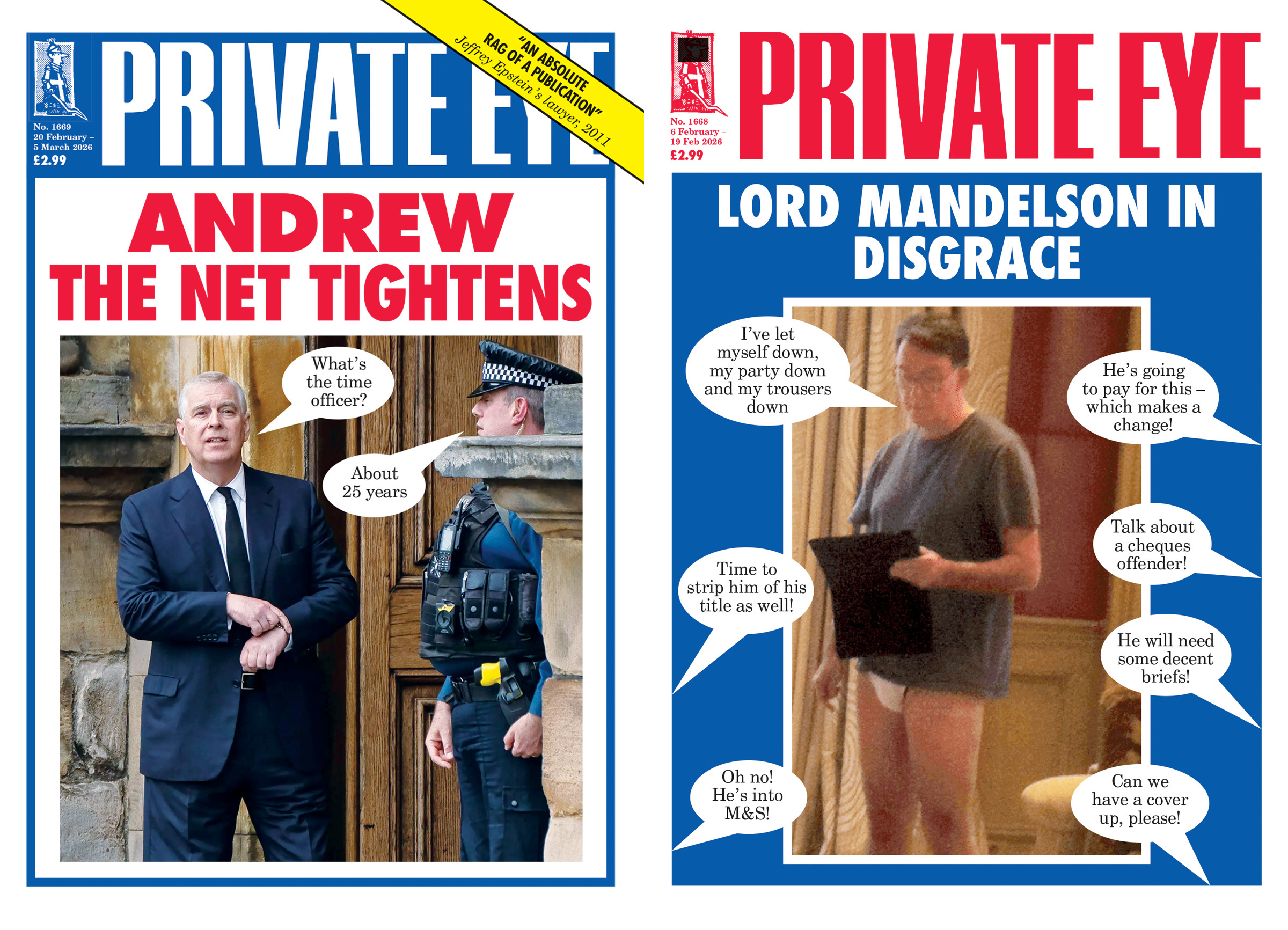
- Lord Mandelson (formerly “Prince of Darkness”), now Peter Mountbatten-Darkness
- The Right Honourable … A peculiar title used in the third person
- Knight Commander of the Most Excellent Order of the British Empire, to give its full name (KBE)
- Sir, not like “Yes Sir” in school or “SIR, YES SIR!” in the military but:
- SIR as in Knight Bachelor or
- Knight Bachelorette aka Dame
- Kings and Queens from a medieval history like:
- Charles Mountbatten-Windsor I’ve stripped him of his title, because he’s #NotMyKing
- Camilla Mountbatten-Windsor I’ve stripped her of her title, because she’s #NotMyQueen
- Elizabeth Mountbatten-Windsor (RIP) I’ve stripped her of her title, because she was never my Queen #NotMyQueen
- Other Fairy Tale Titles from Feudalism like:
- The Duke (of Cambridge) William Mountbatten-Windsor #NotMyDuke
- The Duchess (of Edinburgh) Sophie Mountbatten-Windsor #NotMyDuchess
- The Princess (of Wales) Catherine Mountbatten-Windsor #NotMyPrincess
- The Prince (of Entitlement) Andrew Mountbatten-Windsor, this is less of a fairy tale and more of a horror story for anyone who associated with the disgraced collaborator of convicted sex offender Jeffrey Epstein. Formerly the Prince of York, he’s now simply known as the Prince of Power, Corruption & Lies and definitely #NotMyPrince
Universities everywhere are stuffed full of people with fancy sounding titles too: Professors, Chancellors, Masters, Fellows, Doctors, Proctors, Bachelors, Presidents, Deans, Principals, Rectors, Wardens and so on. Churches love to lord it over us too with their Archbishops, Bishops, Deacons, Priests, Canons and Vicars etc. In many organisations you’ll find plenty of Associate do-da’s, Assistant so-and-so’s, Deputy what-nots, Senior thingamajigs and Vice bla-blas.
Titles, titles everywhere! Some hard earned, some inherited, some awarded, some bought. Some meritocratic, some theocratic, some democratic, some aristocratic. While there are many good and legitimate reasons for using titles, they aren’t always used with honourable intentions. I’m thinking of scenarios like:
- “Don’t you know who I am?”
- “We’re not on first name terms yet”
- “You must use my titles when addressing me…”
Titles can be dehumanising for both addresser and addressee. When titles are stripped from their holder, it is a good reminder that we shouldn’t be too enamoured by them in the first place, especially when they carry lots of baggage. The weightier the titles, the more cumbersome they can be.
Titles have a tendency to put people on a pedestal, which they inevitably fall off at some point. Shelley puts it better:
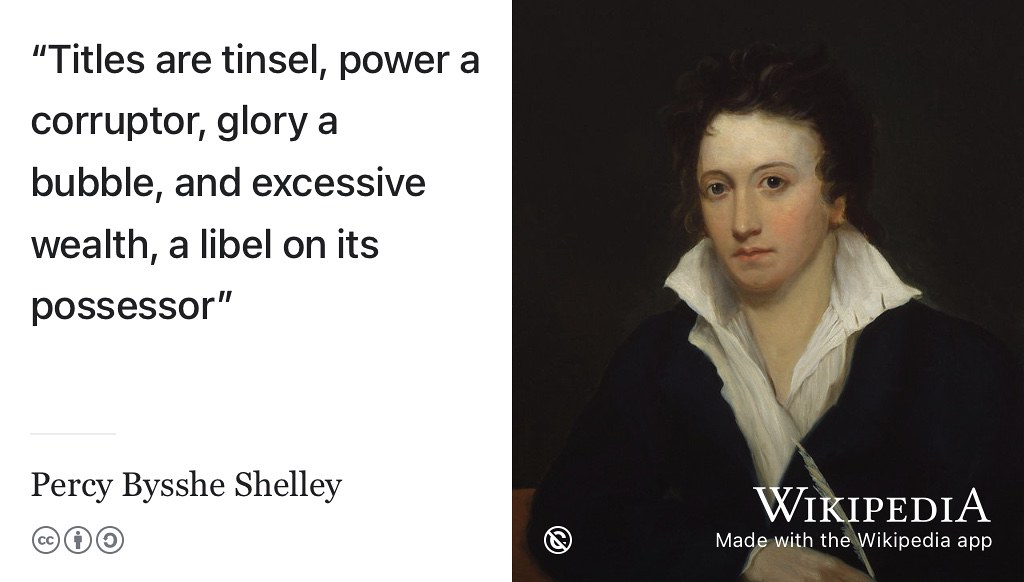
So, titles are tinsel because we’re all human, decorated or otherwise. Maybe you like a bit of tinsel on your Christmas tree, who doesn’t, but a tree is still a tree – with or without the fancy decorations. So the next time you’re impressed by somebody’s title, remember that the titled, en-titled, un-titled, de-titled, re-titled and stripped of their titles, are all just people with very human flaws which might otherwise be obscured by the decorative titles we give them.
We should treat people with respect, not because of their titles, but because they are human.
References
- Shelley, Percy Bysshe (1812) “Declaration of Rights.” In The Prose Works of Percy Bysshe Shelley, Volume 1, edited by E. B. Murray. Romantic Poetry; Oxford University Press. DOI:10.1093/actrade/9780198127482.book.1
You can cite this page using the Digital Object Identifier provided by rogue-scholar.org either the long DOI:10.59350/1fs12-2z824 or the shorter doi.org/qvd8, both of which point to the same thing.
 O'Really?
Leave a comment