O'Really?

July 3, 2026

Praying for divine intervention in Mexico’s mythical high temple: The Estadio Azteca

One of the reasons the World Cup is enjoyable to watch is the memories. Despite all the blatant FIFA corruption, despite all the amateur dramatics, questionable decision making, greenwashing, sportswashing and over inflated egos that FIFA promotes, the tournament resurrects many memories. Some are happy, some are painful. Who were you with, where were you, what were you doing and how did it feel the last time you watched this team or match?
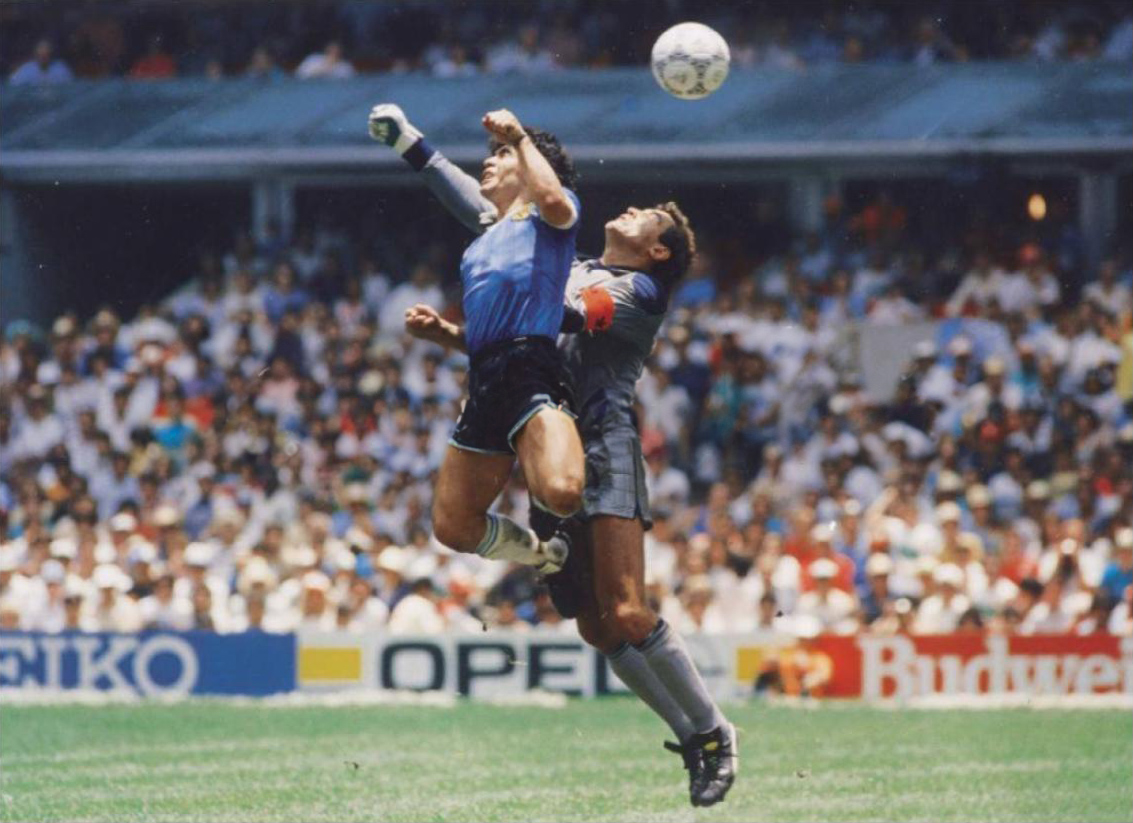
The moment after divine intervention from the infamous Hand of God at the Estadio Azteca with Diego Maradona and Peter Shilton in 1986. Public domain picture from the El Gráfico newspaper via Wikimedia Commons w.wiki/R$NM

The greeks have a name for all this sporting drama: the Olympic agonies (αγώνες). What better way to describing the experience of being a football fan. Agony. Talking of which, the England National Football Team will face Mexico in Mexico City on 5th July at the magnificent Estadio Azteca. Do you remember the last time your team played the Estadio? The venue has some distinguished history including:

The Estadio is the only stadium to have staged two FIFA World Cup finals. While it wowed Pele, Maradona and the Pope, it looks like an Aztec temple of human sacrifice especially for European football teams. Thankfully there’s less blood and no murder, but of the 89 competitive games that Mexico have played there, they’ve only lost two of them. The omen’s aren’t good and neither is the Mexican weather forecast.

While I’m pleased to watch the England national football team make progress at the 2026 FIFA World Cup, they haven’t done so very convincingly, especially in defence. There’s plenty of Dad jokes circulating about England’s defenders being “left-back” (groan) in England. The national team look in need of divine intervention, in their favour this time, for any chance of beating an impressive Mexico on their home turf at high altitude.

So, bring on the agony and if you’re supporting England, get down on your knees and pray for divine intervention. It’s likely to be memorable.
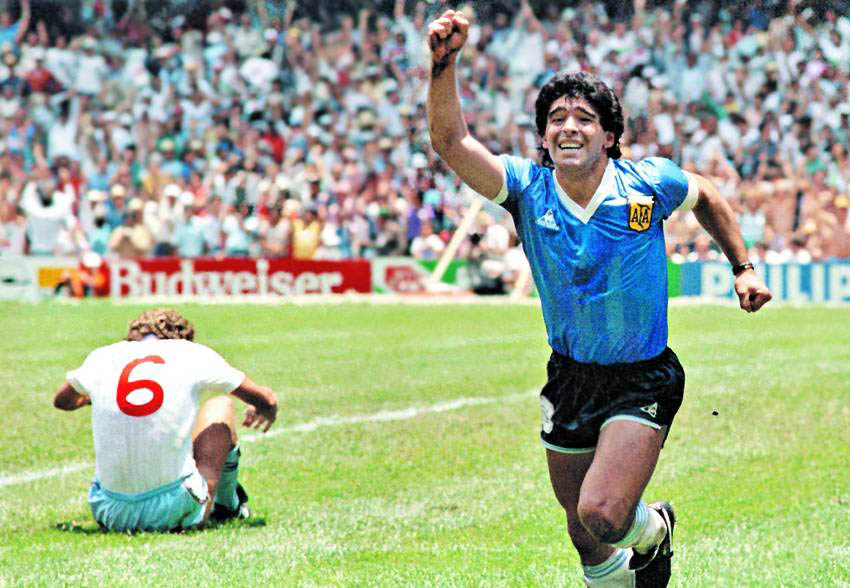
Terry Butcher’s English agony accompanies Diego Maradona’s Argentinian ecstasy at the Estadio Azteca in 1986. Public domain picture by Dani Yako from the Clarín newspaper via Wikimedia Commons w.wiki/R$P$

June 12, 2014

A passion for England: Suffering at the Brazil WorldCup in 2014

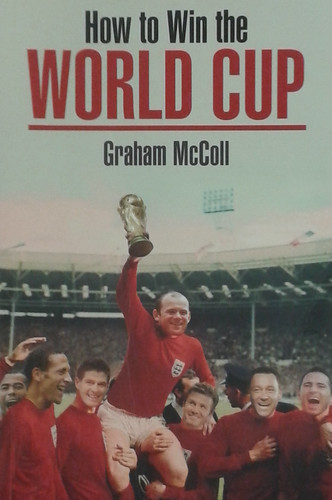
How to Win the World Cup: Step One: Dream on, Dreamer

Are you passionate about your football team? When I say passion I mean passion as in suffering, from the Latin verb patī meaning to suffer. World cups are passionate milestones for many people, they leave indelible marks on the psyche, you remember who you were with, where you were and how your team suffered.

Like many England supporters I’ve suffered as the english media whips up false hope about the prospects of the squad every four years. “This year could be our chance”, and “we’ve got some really good players”, “remember 1966?”, “thirty years of hurt never stopped me dreaming” bla bla bla….

Passionate English suffering at the World Cup (1982-2014)

All this hope, passionately flies in the face of reason, cold facts and history:

So if history [2,3] and mathematics (via predictwise) are anything to go by, there is (at the time of writing) a 96.5% chance that English suffering will continue and a 60% chance that the suffering will occur in the latter stages of the competition…

Wherever you are, whoever you support and whatever their chances, enjoy the inevitable suffering that comes with being passionate about zero-sum games like football. Life would be very boring without passion and suffering…

References

  1. Clemente FM, Couceiro MS, Martins FM, Ivanova MO, & Mendes R (2013). Activity profiles of soccer players during the 2010 World Cup. Journal of Human Kinetics, 38, 201-11 PMID: 24235995
  2. Graham McColl (2010) How to win the World Cup Bantam Press, ISBN: 0593066227
  3. Alex Bellos (2014) Futebol: The Brazilian Way of Life Bloomsbury Paperback ISBN: 0747561796

June 12, 2006

Bend it like Bezier?

Football informatics, theory and practice: Germany 2006

Bayern BallThe frenchman Pierre Bézier knew a thing or two about curves. But as World Cup fever tightens its grip around the globe, it is the footballers in Germany who are showing us just how much they know about the practical science of curving and bending the ball into the goal. Is there any essential curve-theory for World Cup stars like Beckham, Ronaldinho and Thierry Henry to read and brush-up on in their German hotels this summer?

Sports scientist Dr Ken Bray from the University of Bath in the UK hopes that sportsmen and spectators alike will be reading his new book How to Score – Science and the Beautiful Game. This is another popular science book that tries to make fluid dynamics accessible to the layman. In publicising his new book, Ken points out that the new Adidas Teamgeist™ football will unsettle goalkeepers at the World Cup, because the balls move more in the air than traditional ones. This smells of marketing-hype, both for the ball and the book, but it is interesting and topical nonetheless.

Mathematicians and numerical analysts have known for years, the really essential reading for footballers this summer is the famous curves index. These wonderful web pages, free online and completely devoid of hype, describe all the equations for putting the ball in the back of the net in great style. After reading these pages, perhaps World Cup footballers will be able to curve the unpredictable Teamgeist™ ball even more lavishly than before. Just imagine the confusion of a goalkeeper facing a free-kick, when the ball follows a right strophoid curve: y2 = x2(a – x)/(a + x)! This would certainly be more entertaining than the all too predictable and common straight line: y = mx + c that soars over the bar and into row Z of the spectators behind the goal…

Whether scientists, footballers or spectators, we can all enjoy the science of curving at the World Cup in Germany this summer. Bis Bald Berlin!

References

  1. Bend it Like Beckham: The curve ball free-kick (France 1998)
  2. Bénd it Like Bézier: The Bézier Curve
  3. Bend it like Brazil: A perfect example of a free-kick by Roberto Carlos
  4. Bend it like Euclid: Is a straight line a curve?
  5. Computer Graphics: Curves and Surfaces, Bézier representations
  6. From the beautiful game to the computiful game: Nature catches football fever
  7. Goal fever at the World Cup: Why the first strike counts
  8. This post was originally published on nodalpoint with comments

Blog at WordPress.com.