Screenshot from stendhalgame.org, the software used in this project
Mentors can enrich and extend your teaching by supporting students learning during their study. Here’s a paper I presented yesterday describing some teaching we’ve done over the last decade (2015-2025) mentoring software engineers on a second year undergraduate course in Computer Science at the University of Manchester in the UK. Our mentors have come from around forty different organisations from startups to BigTech and everything in between, using a Massively Multiplayer Online Role-Playing Game (MMORPG) called stendhalgame.org for the project. Here’s the abstract of the paper below [1] published open access in the full conference proceedings from Computing Education Practice (CEP) at Durham University via the ACM Digital Library [2]:
Employers often remark that Computer Science graduates do not have the right skills to work on modern software engineering projects where agile practices, continuous integration, test-driven development, git workflows and regular code reviews are commonplace. To address this issue, we designed a course to introduce students to some of the realities of software engineering outside of academia. We describe the journey of building and running an industrial mentoring scheme for this course where students are assigned an experienced engineering mentor from industry who each guide a small team of six through an open source project.
This sets the course apart from the more traditional engineering projects, where students build small and simple system from scratch. Instead we ask students to fix bugs and add features in a large and unfamiliar open source codebase, a game called stendhalgame.org. The mentoring scheme is a key part of enabling that, both in terms of motivating the students but also in providing guidance and advice on how to tackle these kinds of software engineering task. We reflect on the program, which has been taken by more than 2000 second year students over a nine year period. The main contribution is the combination of human mentoring with software that facilitates more meaningful discussions between mentors and mentees that would otherwise have not taken place. As far as we can tell, this is novel in the UK in terms of scale and approach.
Thanks to the students, Graduate Teaching Assistants (GTAs), mentors and my co-authors (especially Suzanne Embury but also Ben Possible, Christopher Page and Tom Carroll) who made this work possible by designing, developing, delivering, improving and (in the case of students) actually doing the course. Thanks to Karl Southern and Steven Bradley for organising CEP, which celebrated its tenth birthday 🎂 this year. We wrote a paper about that too, but that’s another story for another post. [3]
If you teach some kind of Computing, you might enjoy attending CEP, even if you don’t want to publish anything. It’s a good place to learn about what others are doing, because the focus on Practice, rather than Research. [3] CEP is full of lots of good ideas, papers, workshops and interesting people teaching Computing at a wide range of institutions from primary school through secondary school, from FE Colleges, Apprenticeships and a range of different Universities. I’ll post the slides and recorded presentation talk here shortly. The full course material is at software-eng.netlify.app
References
Duncan Hull, Suzanne Embury, Ben Possible, Christopher Page and Tom Carroll (2026) Improving practical software engineering teaching with industrial mentoring of open source team projects. CEP ’26: Proceedings of the 10th Computing Education Practice Pages 29–32, DOI:10.1145/3772338.3772350
CEP ’26: Proceedings of the 10th Computing Education Practice, Durham University DOI:10.1145/3772338
Steven Bradley, Rosanne English, Sally Fincher, Duncan Hull and Mark Zarb (2025) From Marco to Maria: Ten Years of the Computing Education Practice Conference, Koli Calling ’25: Proceedings of the 25th Koli Calling International Conference on Computing Education Research Article No.: 15, Pages 1 – 11 Article No.: 15, Pages 1–11 DOI:10.1145/3769994.3770003
All your dreams are made, when you’re chained to the lecture and the teaching trade. Was that lecture, lab or lesson a dream or a nightmare? Exactly what did you learn from the experience? When you reflect on it, how will you tell yourself and others the stories of your study?
The stories students tell about what they have learned, the teaching they experience and research they are exposed to are a key part of the story of every University. These stories demonstrate the value that a University adds to society through the people that it educates, the knowledge, skills and abilities that students at that organisation acquire alongside the research that the institution does.
How are teaching and learning represented in stories online? We analysed the frequency of the keywords TEACH*, LEARN*, STUDENT*, RESEARCH* and SCHOLAR* in ten years of stories summarised in annual press releases. These stories were published by the University of Manchester every December from 2015 to 2024. The main results of the analysis were presented this week [1,2,3] at the Institute of Teaching and Learning (ITL) conference are shown below in Figure 1. There is bad news and good news:
Figure 1: Average frequency of keywords per article over ten years, 2015-2024. On average the words TEACH* and LEARN* occurred just 1.3 and 0.6 times per article in comparison to STUDENT* and RESEARCH* which occurred more than 9 and 15 times in each press release respectively. In theory, teaching has parity of esteem with research, but in practice, this is clearly not the case when counting words in press releases. See [1] for full data.
The BAD NEWS is, the words in our press releases are a long long way off from the words in our strategic vision. [4] This will be disappointing and demoralising for anyone who cares about teaching and learning because our press releases mis-represent a huge amount of important learning done by thousands of our students. They also under-represent massive amounts of teaching delivered by our colleagues across the University. As Duygu Candarli and Steven Jones have shown, this a common pattern repeated across the Higher Education sector. [5] This isn’t just a Mancunian problem, there is a lack of integrity in much of the UK HE sector, what Steven Jones calls “integrity deficits”. [6]
However, the GOOD NEWS is there’s plenty we can do to improve the narrative, by getting on what Sue Beckingham calls the Scholarship of Teaching and Learning (SoTL) staircase [7]. There are some simple and easy steps we can take to tell better stories that represent more accurately what our University (and wider HE sector) actually does. There is a good chance these steps could lead us upwards towards better teaching and scholarship, with students learning more skills and knowledge to prepare them for the world beyond University.
The presentation makes some suggestions for how academic staff can go about climbing the SoTL staircase to deliver even better teaching and an even better learning experience for students. For example, you could:
Listen to and be a guest on pedagogical podcasts at the University such as Good Practice in Teaching
These are small steps that go in the right direction towards rebalancing the imbalance above. So whatever you are learning and whoever you are teaching, what’s your story, learning glory?
References
Hull, D. (2025) What’s the Story, Learning Glory: Why we need to hear more stories about teaching and learning at the University of Manchester, White paper DOI:10.5281/zenodo.15684409
Hull, D. (2025) What’s the Story, Learning Glory: How we can get better at telling teaching stories at the University of Manchester, Poster presentation #ITLConf25 DOI:10.48420/29360969.v4 (Low resolution screenshot below, for higher resolution use the DOI above)
Blake, J (2025) University of Manchester Teaching and Learning Conference: Abstract Booklet, DOI:10.48420/29371811.v1
Candarli, D., & Jones, S. (2022). The representation of students in undergraduate prospectuses between 1998 and 2021: a diachronic corpus-assisted discourse study. Critical Discourse Studies. DOI:10.1080/17405904.2022.2130952
Jones, S. (2022) Universities Under Fire: Hostile Discourses and Integrity Deficits in Higher Education. (Palgrave Critical University Studies). Palgrave Macmillan. DOI:10.1007/978-3-030-96107-7
Beckingham, S (2025) SoTL Staircase, National Teaching Repository. Figure. DOI:10.25416/NTR.29438096.v1
Figure 1: Twelve student voices from the last twelve months, interviewed and broadcast in twelve podcast episodes. From top left, Raluca, Jason, Brian, Carmen, Sneha, Alice, Jason, Ivo, Ingy, Nadine, Pedro and Amish. Portraits re-used from LinkedIn and Github with students permission.
According to Stephen Fry, “education is the sum of what students teach each other between lectures and seminars”. A more teacher-centric view of education would claim the opposite to be true, that education is primarily about what teachers teach their students, not what students teach other. Here’s how this old-school, chalk-and-talk view of education works: In lectures, seminars, labs and tutorials, teachers share their knowledge and expertise with students. While the Professors profess their monologues, the lecturers lecture, the educators educate, the teachers teach and the students study. Learners learn by watching, listening, reading and acting on the voices of their educators. Students are then examined, grades are given and that, in a nutshell, should be what the sum of education is. No?
The reality of course, is that education should be much more of a dialogue, a two-way conversation between students and teachers, rather than an expert-driven monologue to a passive audience. Both sides of this conversation need to be heard and in some cases, the student voices in these conversations can make valuable contributions, by co-creating curricula.
All too often the student voice gets drowned out in the busy noise of pedagogy. The demands of teaching in higher education mean that staff don’t always sufficient time and resources to listen, especially when teaching classes of hundreds of students with many ongoing conversations. In this blog post, I’ll explain how you can amplify some important student voices in these conversations using audio podcasting. I’ll describe some of the costs and benefits of recording and publishing these conversations so that more people can hear and learn from these voices, not just students but their employers and their educators too.
Student voices on employability
Student voices are particularly important when it comes to employability: enabling undergraduates to develop the professional skills that are essential to the workplace. I’ve been teaching professional skills and employability to Computer Science students for the last ten years at the University of Manchester. During this time, I’ve learned that there are many different voices and opinions that need to be heard. Which of these voices, written or spoken, do students pay attention to most? Is it:
❌ The voices of their employability tutors?
❌ The voices of their Professors and lecturers?
❌ The voices of their careers service consultants and advisors?
❌ The voices of employers and alumni?
❌ The voices of their friends and family?
These voices all have their own influence, but in my experience, there’s one voice that is listened to above all others when it comes to employability and that is:
✅ The voices of their fellow students
So, one way to improve teaching and learning, is to maximise opportunities for students to learn from each other through peer learning and peer instruction. To do this, educators need to create more and better spaces for students to talk about their learning with each other and then amplify their voices.
There are lots of different ways to do this, but one of the most important is through Peer Assisted Study Sessions (PASS) at peersupport.manchester.ac.uk. These sessions allow more experienced students to pass on their knowledge to their less experienced, usually younger, peers. For example, the PASS scheme in Computer Science shown in figure 2, is run by my colleague Thomas Carroll. There is a focus on passing exams, but PASS is about much more than just improving students grades. It’s about students learning from and teaching each other as part of a student-led community.
Figure 2: Peer Assisted Study Sessions (PASS) allow more experienced students pass on their knowledge to their less experienced peers. First years have PASS1 (in yellow), run by second and third year students. Second years have PASS2 (in green), where students returning from internships and placements share their knowledge about job hunting and interviews. PASS3+ (in pink) is where our alumni can get involved. CC-BY-SA picture by yours truly
As well as helping students to pass academic exams, our PASS scheme also helps students to pass employers “exams”. This includes written exams such as job applications and oral exams such as interviews. This is a significant part of PASS2, where students returning from placements and internships share what they have learned with first and second year students.
Students are encouraged to take part in PASS, either as leaders, facilitators or participants, but the kinds of conversations that take place during these sessions often need to be amplified for those that aren’t in the room where it happens.
Over the last 12 months, I’ve been experimenting with using audio podcasts to record and publish some of these conversations as stories so they can heard by a wider audience. I’m calling them audio podcasts here to distinguish them from the video podcasts (lecture capture and catchup) you will find at mypodcasts.manchester.ac.uk. You can subscribe and listen to audio podcasts wherever you get your podcasts, details at the end of this post.
Figure 3: The Hearing your Future podcast is a cross between Desert Island Discs hosted by Lauren Laverne and The Life Scientific hosted by Jim Al-Khalili. Subscribe and listen wherever you get your podcasts. CC-BY-SA Portrait of Lauren Laverne by Jwslubbock on Wikimedia Commons w.wiki/6z4z, CC-BY-SA portrait of Jim Al-Khalili by Debbie Rowe at the Royal Society on Wikimedia Commons w.wiki/_w2fh, CC-BY-NDHearing your Future artwork by Visual Thinkery.
The essential ingredients of this podcast are:
Students: both graduands ready to graduate and recent graduates at the start of their career. Twelve students have been interviewed so far, with more episodes planned for the future.
An audio podcast host, I’m using one called liberated syndication at libsyn.com
Some open ended questions for students to answer
Figure 4: Any investment you make in recording technology will pay you back with higher-fidelity audio. This particular microphone, a Zoom H5, is handy because it can be used in a portable battery-powered mode or connected to a computer via USB. CC-BY-SA picture by yours truly.
The open-ended questions are key because I need to let students do most of the talking, acting as much more of a listener than a speaker. Think less Professor Monologue, the egocentric “sage-on-the-stage” who loves the sound of their own voice and more Professor Dialogue, the “guide-on-the-side” who facilitates discussion. [1] It sometimes takes effort for academics to suppress their public speaking instincts by talking less and listening more to what students have to say. Students are given five questions before the interview, with questions designed to encourage difficult conversations being optional. The five basic questions are:
🎸 What’s your story, (coding glory)?
✊🏽 Minority report (optional)
👑 You are the next vice chancellor (optional)
🍿 One tune, one book, one podast, one film
⏱ Time traveller, advice to your former self
Question one asks students to tell their story from why they studied computer science in the first place to where they are now. What obstacles have they faced in finding work and how did they overcome them? What has been their journey from student in year one to professional in year three or four? Every student has a different story to tell.
Question two asks students to reflect on their experience if they identify as a member of a minority group. What can employers and universities do to make campuses and workplaces more welcoming to members of their minority group? What has been their experience of being female, black, disabled or otherwise marginalised in computing? What can we do to make campuses more equal, diverse and inclusive spaces?
Question three asks students to imagine they are the next vice chancellor of the University of Manchester. Now that they are responsible for over 10,000 staff, 40,000 students and half a million alumni, what would they do to improve teaching and learning?
Question four is a personal one: students recommend a tune, a book, a podcast and a film and outline why these are important to them. Why do they recommend other students should watch, listen to or read them? This is the Desert Island Discs part, except we don’t cast students away to a remote island afterwards. It adds a personal touch to the stories students tell.
Finally, question five is another hypothetical one: given a time machine, if they could travel back to meet themselves in first year, what advice would they offer their former selves and fellow students about getting the most out of all the time and money they’ve invested in their University education?
I ask these simple, open-ended questions, sit back and enjoy listening to students answer them.
Everything I had to know, I heard it on my radio
As with radio broadcasting, there are costs and benefits of podcasting. The main cost is the time it takes to record, transcribe and edit each episode. Each interview takes an hour to record, more than an hour to transcribe and less than an hour to edit. These costs are relatively small, when you compare them to the cost of preparing a lecture (video lecture or live lecture), delivering a seminar, running a lab or facilitating a tutorial.
There are many benefits that this investment in podcasting buys. From a teaching point of view, I’ve learnt more about the harsh realities of job hunting faced by Generation Z. It also gives me seriously useful content in the form of case studies. So when I’m talking to students about the need for resilience in their job search I can tell Brian’s story, about finding a placement very late in the year (August) on LinkedIn. Don’t give up, it worked for Brian, maybe it will work for you too.
When discussing the importance of starting early, in first year, I can tell Alice’s story about how spring insights in her first year gave her some valuable experience to help her subsequent job applications stand out in second year and beyond. Start early, it worked for Alice, maybe it will work for you.
When discussing the inevitable rejection that comes with job applications, I can tell Amish’s story about being rejected by all five big tech companies (Microsoft, Google, Apple, Facebook and Amazon) before landing a role he enjoyed with Bloomberg. Learn to live with rejection, it’s a normal part of job hunting but it will most likely work out for you in the end.
When talking about not overlooking smaller employers, I can tell Raluca’s story about how she worked for a local company called Koder.ly in Oldham at the end of her first year, then moved onto CERN for her placement year and subsequent graduate role. You can start small, think big and remember that experience matters.
When discussing the importance of networking, I can tell Jonathan’s story about how he grew his professional network and found hidden vacancies by attending local tech meetups in Manchester. It’s not just what you know, it’s who you know.
These are just five short stories, from the twelve longer stories that students have shared with me. Recording them as podcasts has enabled me to amplify the student voice for more people to hear.
Another benefit of the podcast is, it has strengthened our community of students, alumni and employers. With permission, students have shared their LinkedIn profiles to facilitate digital networking. This means that students can find out about and connect with peers they might never otherwise have spoken to. It has also helped staff and employers understand better what challenges students face in an increasingly competitive job market.
So, what started as an experimental side project, has now become a key part of my teaching toolkit. It’s also has been rewarding to listen to and record students stories in an audio podcast format.
Conclusions: a good face for radio?
Podcasting is a low cost tool with many benefits for teachers and learners alike. Audio is fantastic medium for recording conversations and stories, especially if (like me), you have a “good face for radio”. [2] Most students are much more comfortable talking to a microphone than a video camera, because having a natter over a brew is a very natural format. Podcasting forces me to spend more time thinking about dialogue and less time making flashy animations and graphically-driven PowerPoint monologues. In this case, it’s enabled me to focus on what students are teaching other, rather than what I think they need to learn, so I can improve the Intended Learning Outcomes (ILOs) for my courses.
The student voices I’ve chosen to amplify have been deliberately “cherry picked” so I can’t pretend that their voices are representative of the entire study body. However, recording a few key voices documents how students learn professional skills for the workplace in a way that other students can learn from. A lot of higher education focuses on a narrow set of academic and technical skills, alongside fundamental knowledge. These are important, but a rounded education should develop a much broader set of softer personal and social skills that are just as important to talk about and recognise as the hard technical skills. Education is the sum of all these skills and knowledge, students play as important a role in teaching each other as their teachers do, shown in figure 5.
In the future, I plan to keep recording and broadcasting student voices to broaden the set of interviewees to include alumni who graduated further back in time. I welcome any comments on how these interviews can be improved in the future. Subscribe and listen wherever you get your podcasts:
As Stephen Fry points out, students play a crucial and often overlooked role in the education of their peers. Their voices need to be heard by a wider audience, not just their fellow students but their employers and educators too. Audio podcasting is a good way to amplify their voices. If you are a former student of Computer Science at the University of Manchester and would like to amplify your story about your personal journey from student to professional (and beyond), get in touch.
Figure 5: What is education the sum of? What students teach each other! Fry describes his student-centred view of education in The Fry Chronicles. [3] Public domain portrait of Stephen Fry by the US Embassy in London w.wiki/4wrn adapted using the Wikipedia App
References
King, Alison (1993) From Sage on the Stage to Guide on the Side, College Teaching, Vol. 41, No. 1 , pp. 30-35, DOI: 10.1080/87567555.1993.9926781
A video of the presentation given at the #ITLConf23 conference in Manchester at the Pendulum Hotel, 6th July 2023, see doi.org/kk47 (Please excuse the audio errors and background noise in this recording, artefacts created by the software and microphone which I’m still learning to configure properly)
Thanks Judy Williams, Jennie Blake, Hannah Cobb, Holly Dewsnip-Lloyd, Lisa McDonagh, Freya Corrywright, Beth Rotherham, Emma Sanders, Patricia Clift Martin and everyone at the Institute for Teaching and Learning (ITL) for organising the conference where this talk was first presented.
There’s a community of people here who use the R language to get stuff done known as the R Usergroup Manchester (RUM). We meet monthly to learn from each other. At the last meetup on 29th June, I gave a joint talk with Stavrina Dimosthenous about quarto.org and its predecessor bookdown.org. Following Stravrina’s quick introduction to Quarto, I gave a lightning talk about some of the pros and cons of using bookdown to write books.
Since the talk was recorded, I’ve posted the video below, which is a lo-fi Microsoft Teams recording, which doesn’t include any of the Q&A that followed.
TL:DR; Bookdown and quarto are useful and very well documented tools for publishing books that can help you overcome some of the (many) limitations of Learning Management Systems like Blackboard. If you’re writing anything book shaped in your teaching (or elsewhere) I reckon that bookdown/quarto are good tools that are worth learning as they’ll help you to get stuff done.
Thanks Kamilla Kopec-Harding for organising and hosting the talks, a promotional poster for which, you can see below. 🙏
References
Wickham, Hadley, and Garrett Grolemund. 2017. R for Data Science. O’Reilly UK Ltd. r4ds.had.co.nz.
Xie, Yihui. 2017. Bookdown: Authoring Books and Technical Documents with R Markdown. Boca Raton, Florida: Chapman; Hall/CRC. bookdown.org/yihui/bookdown.
Xie, Yihui, Christophe Dervieux, and Emily Riederer. 2020. R Markdown Cookbook. Boca Raton, Florida: Chapman; Hall/CRC. bookdown.org/yihui/rmarkdown-cookbook.
Java is widely used as a teaching language in Universities around the world, but what wider problems does it present for novice programmers? Join us to discuss via a paper published in TOCE by Neil Brown, Pierre Weill-Tessier, Maksymilian Sekula, Alexandra-Lucia Costache and Michael Kölling. [1] From the abstract:
Objectives: Java is a popular programming language for use in computing education, but it is difficult to get a wide picture of the issues that it presents for novices, and most studies look only at the types or frequency of errors. In this observational study we aim to learn how novices use different features of the Java language. Participants: Users of the BlueJ development environment have been invited to opt-in to anonymously record their activity data for the past eight years. This dataset is called Blackbox, which was used as the basis for this study. BlueJ users are mostly novice programmers, predominantly male, with a median age of 16. Our data subset featured approximately 225,000 participants from around the world. Study Methods: We performed a secondary data analysis that used data from the Blackbox dataset. We examined over 320,000 Java projects collected over the course of eight years, and used source code analysis to investigate the prevalence of various specifically-selected Java programming usage patterns. As this was an observational study without specific hypotheses, we did not use significance tests; instead we present the results themselves with commentary, having applied seasonal trend decomposition to the data. Findings: We found many long-term trends in the data over the course of the eight years, most of which were monotonic. There was a notable reduction in the use of the main method (common in Java but unnecessary in BlueJ), and a general reduction in the complexity of the projects. We find that there are only a small number of frequently used types: int, String, double and boolean, but also a wide range of other infrequently used types. Conclusions: We find that programming usage patterns gradually change over a long period of time (a period where the Java language was not seeing major changes), once seasonal patterns are accounted for. Any changes are likely driven by instructors and the changing demographics of programming novices. The novices use a relatively restricted subset of Java, which implies that designers of languages specifically targeted at novices can satisfy their needs with a smaller set of language constructs and features. We provide detailed recommendations for the designers of educational programming languages and supporting development tools.
Neil C. C. Brown, Pierre Weill-Tessier, Maksymilian Sekula, Alexandra-Lucia Costache and Michael Kölling (2022) Novice use of the Java programming language ACM Transactions on Computing Education DOI:10.1145/3551393
Public domain portrait of Stephen Fry by the US Embassy in London on Wikimedia Commons w.wiki/4wrn
It’s easy to undervalue the importance of natural languages like English because we use them everyday. Scientists and engineers can be particularly bad at this, often overlooking the importance of written and spoken language. It probably doesn’t help that in the UK, and many other countries, many students choose either an exclusively scientific-mathematical path OR an arty-humanities path through their education, especially in the latter stages. This means that the two cultures of humanities and science are thriving, but still living in separate houses like an estranged and bickering couple. In the worst case scenario, two cultures in society produces graduate scientists and engineers with weaker communication and literacy, and articulate humanities graduates with weaker technical & numeracy skills.
Over on BBC4, Alan Yentob is having conversations with prominent artistes. [1] The first episode in the series is with writer, presenter, comedian and actor Stephen Fry. As a self-confessed Fry-fanboi, I enjoyed his description of the joy of using language:
YENTOB: Why do you need all that stuff?
FRY: I think what underlies 90%, if not more, is language, is a real profound love and excitement at the process of putting one word after another and what happens when you do it.
Not just the meanings that are conveyed and the moods you can create with language, but even the text of it, the tip of the tongue hitting the back of the teeth, the rhythm, the swing, the swoop, the flow, the joy, the sound and sex of language. People have that with music. We all have it with music. Music is often described as being beyond language, and indeed it is and I’m the first to say how profound I think music is.
But everybody has language, and yet almost nobody has such a realisation of what a beautiful thing it can be. I mean one of the thrills that’s happened in music in the last 20 or so years, I suppose, is rap and hip-hop and poetry slamming and things like that because then it’s taken away from the normal people who are people like me, who, as it were, have an educated sense of language and its returned to where language belongs.
And so the wildness and freedom of using language with joy and pleasure and realising we’re all the equivalent of grade eight musicians, or painters, only with language.
Elizabeth Line roundel by Transport for London via Wikimedia Commons w.wiki/5iib
So we’ve finally reached the end of the Elizabethan line. Not the the CrossRail route that straddles London but the seventy year reign of Elizabeth II from 1952 to 2022. Like many, I have mixed feelings about our monarch and monarchy but the history of the last seventy years should fascinate republicans, royalists and anarchists alike. So here are some historical facts about the start of the Elizabethan line for your amusement:
🏳️🌈 In 1952 Alan Turing was working on two new areas of research he’d recently pioneered called “Computer Science” and “Artificial Intelligence” (AI). The very same year Turing was prosecuted for being homosexual which was shamefully labelled “gross indecency” and illegal at that time. He tragically committed suicide two years later in 1954 after being chemically castrated by the government of the UK. Her Majesty’s Government was led at the time by some bloke called Winston Churchill, see en.wikipedia.org/wiki/Gross_indecency
🇺🇸 In 1952 The England National Football Team were recovering from their debut appearance in a FIFA World Cup two years previously. In a pattern that is now familiar, England failed to make it through to the final stages of the 1950 tournament in Brazil after beating Chile but losing to both Spain and the United States, see en.wikipedia.org/wiki/United_States_v_England_(1950_FIFA_World_Cup)
⚛ In 1952, Geneva was selected as the site for the Organisation Européenne pour la Recherche Nucléaire (CERN), the vast network of underground tunnels and machines that can be found there now were just an idea seventy years ago see home.cern/about/who-we-are/our-history
It’s easy to view the events of the 1950s as ancient history and evidence of how far we have travelled down the Elizabethan line. However in 1952, when Elizabeth was 26 years old, her son Charles was 4 years old, Alan Turing was 40 and Winston Churchill was 78. So the history is not that ancient, especially if you’re an octogenarian or a nonagenarian.
Yes it is a long time ago, but it is almost within living memory. Almost.
Mind the Gaps
What a remarkable seventy years of history, so much has happened in a relatively short period of time. At the end of the journey, it feels like there’s a big gap at the end of the Elizabethan line as we search for our connection and onward destination. Not just one gap but lots of gaps:
The gaps between wealthy elites and everybody else
The gaps between those educated privately (including the royal family) and the other 93%
The gaps between London at the rest of the United Kingdom
The gaps between the UK and the rest of the world
The gaps between expectations and reality
The gaps between historical memories and the present day
The gaps between the Elizabethan line and the Carolean line
I wonder where we will be after another gap of seventy years, if the human race is here at all in the year 2092?
As the station announcers often warn as you disembark on the London Underground, mind the gap.
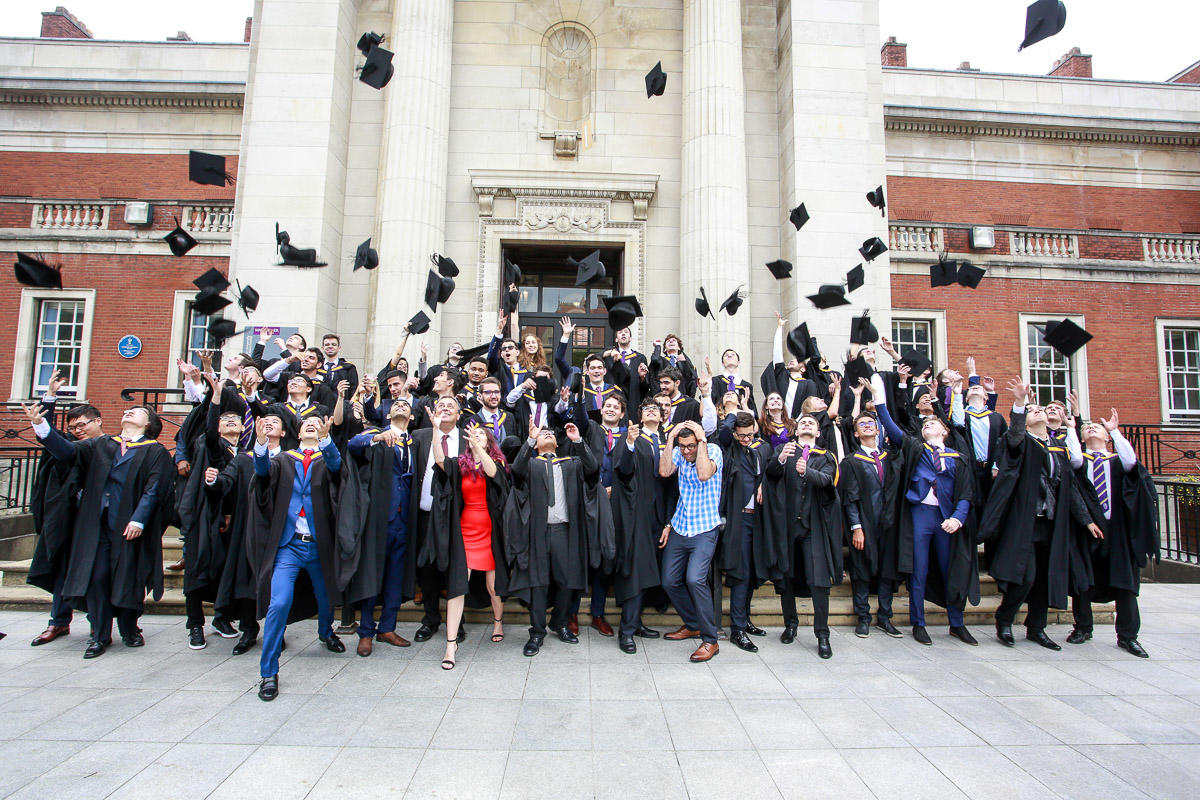
Last week we celebrated graduation, its been the first proper graduation since before the pandemic. A lot proverbial water has passed very quickly under our proverbial bridge since this years graduates starting studying back in 2018/19. What obstacles have they faced during their study and placements and how have they overcome them? Where are they going next? What’s their story? I interviewed five of this years graduands and previous years graduates to find out. Hear from some of our students including:
Sneha Kandane, she’s returning Matillion where she did her industrial placement cdyf.me/sneha
Carmen who did an internship at McKinsey and a placement at The Walt Disney Company cdyf.me/carmen
Brian Yim Tam who did a placement at Disney Streaming here in Manchester cdyf.me/brian
Raluca Cruceru who did a placement at CERN where she now works as a software engineer cdyf.me/raluca
Jason Ozuzu who did a placement at Morgan Stanley, an internship at FitBit and is joining Google in London cdyf.me/jason
Congratulations to all this years graduates, it was lovely to celebrate your achievements despite the considerable challenges you’ve faced during the last three of four years. Thanks to Sneha, Carmen, Brian, Raluca and Jason for sharing your stories too.
Computing is too important to be left to men, but where have all the women gone? While women continue to play a key role in computing they are currently under-represented in Computer Science. How can we change this and what evidence is there for practices that get more women into computing? We discussed this paper by Briana Morrison et al [1] on Monday 7th February at journal club. Here is the abstract of the paper:
Computing has, for many years, been one of the least demographically diverse STEM fields, particularly in terms of women’s participation. The last decade has seen a proliferation of research exploring new teaching techniques and their effect on the retention of students who have historically been excluded from computing. This research suggests interventions and practices that can affect the inclusiveness of the computer science classroom and potentially improve learning outcomes for all students. But research needs to be translated into practice, and practices need to be taken up in real classrooms. The current paper reports on the results of a focused systematic “state-of-the-art” review of recent empirical studies of teaching practices that have some explicit test of the impact on women in computing. Using the NCWIT Engagement Practices Framework as a means of organisation, we summarise this research, outline the practices that have the most empirical support, and suggest where additional research is needed.
There is lot of stuff in this paper, and we barely scratched the surface. Personally, one of the things I found useful was the National Center for Women in Technology (NCWIT) Engaging Practices Framework which I’d not seen. These have advice on how to make computing a more inclusive subject for all students, not just women. Some of the guidelines include:
Make it matter (e.g. by making interdisciplinary connections and addressing misconceptions)
Build student confidence and professional identity (e.g. by encouraging a growth mindset)
Grow an inclusive community (e.g. by using well-structured collaborative learning and avoiding stereotypes)
The evidence for which approaches work isn’t particularly strong, see Jane Waites lightning talk slides, but there is some evidence to suggest these practices can help to make small steps in the right direction. The evidence is outlined in the paper.
References
Briana B. Morrison, Beth A. Quinn, Steven Bradley, Kevin Buffardi, Brian Harrington, Helen H. Hu, Maria Kallia, Fiona McNeill, Oluwakemi Ola, Miranda Parker, Jennifer Rosato and Jane Waite (2021) Evidence for Teaching Practices that Broaden Participation for Women in Computing in Proceedings of the 2021 Working Group Reports on Innovation and Technology in Computer Science Education DOI:10.1145/3502870.3506568
Why should students bother with open source software? Join us to discuss why via a viewpoint piece published by Diomidis Spinellis of Athens University and Delft University of Technology published in the July issue of Communications of the Association for Computing Machinery. [1] Here’s the introduction
Learning to program is—for many practical, historical, as well as some vacuous reasons—a rite of passage in probably all computer science, informatics, software engineering, and computer engineering courses. For many decades, this skill would reliably set computing graduates apart from their peers in other disciplines. In this Viewpoint, I argue that in the 21st century programming proficiency on its own is neither representative of the skills that the marketplace requires from computing graduates, nor does it offer the strong vocational qualifications it once did. Accordingly, I propose that computing students should be encouraged to contribute code to open source software projects through their curricular activities. I have been practicing and honing this approach for more than 15 years in a software engineering course where open source contributions are an assessed compulsory requirement. Based on this experience, I explain why the ability to make such contributions is the modern generalization of coding skills acquisition, outline what students can learn from such activities, describe how an open source contribution exercise is embedded in the course, and conclude with practices that have underpinned the assignment’s success
Spinellis, Diomidis (2021). “Why computing students should contribute to open source software projects”. Communications of the ACM. 64 (7): 36–38. DOI:10.1145/3437254





 O'Really?