There are plenty of reasons that learning is challenging but there’s one reason that really stands out: feedback. We learn more efficiently when we can get timely, constructive and personalised feedback on our work from somebody who knows what they are talking about. Whatever you are learning, in the finite time you are learning it, answering these three questions will provide feedback to help you progress:
- Which skills and knowledge should have the highest priority in your life (both curricular and extra-curricular)?
- What skills and knowledge are you learning best and how do you know you are making progress?
- What skills and knowledge do you need to improve and how are you going to learn them?
These simple questions often give complex feedback that consumes time and resources, both of which are in limited supply for you and the community that teaches you. You can’t always get what you want, when you need it. That’s why learning is so difficult.
Teaching is Really Challenging Too
If learning is really challenging then it shouldn’t be a surprise to discover that teaching is really challenging too, for the exactly the same reasons. Like you, your teachers are only human (honest!) and we make mistakes – I’m sure you’ve noticed. We’ll be more likely to learn from our mistakes if we can get timely, constructive, actionable and personalised feedback from students. We ask ourselves the same three questions above to help us make progress, but like you, our time is finite as well so:
- Which knowledge and skills should we give the highest priority to in our teaching? Where do they fit inside, alongside and outside of curricula?
- What skills and knowledge are we teaching best and how will we know when our students are making sufficient progress?
- What skills and knowledge do we need to teach better and how are we going to assess them?
Right across the higher education sector, it’s a struggle to get feedback on teaching, positive or negative. Students are very busy, have higher priorities, suffer from endless survey fatigue and don’t always recognise the value of giving constructive feedback. Disengaged students don’t believe that their feedback will be listened to or acted on. All of this results in unit surveys that typically have response rates so embarrassingly low (less than 1%) that some UK Universities have abandoned using them completely. The tiny amount of data they provide is often meaningless, distorted and unreliable. Yet Universities continue to use them to assess the quality of their teaching and inform decisions about promotions.
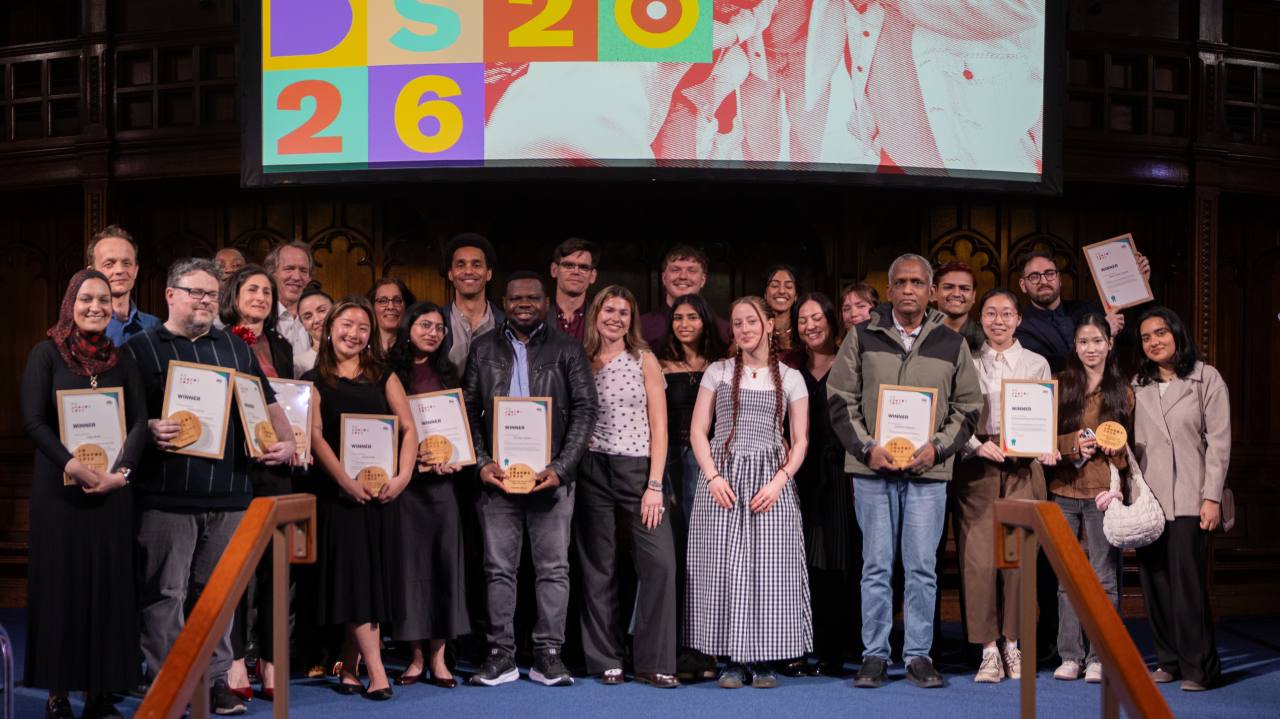
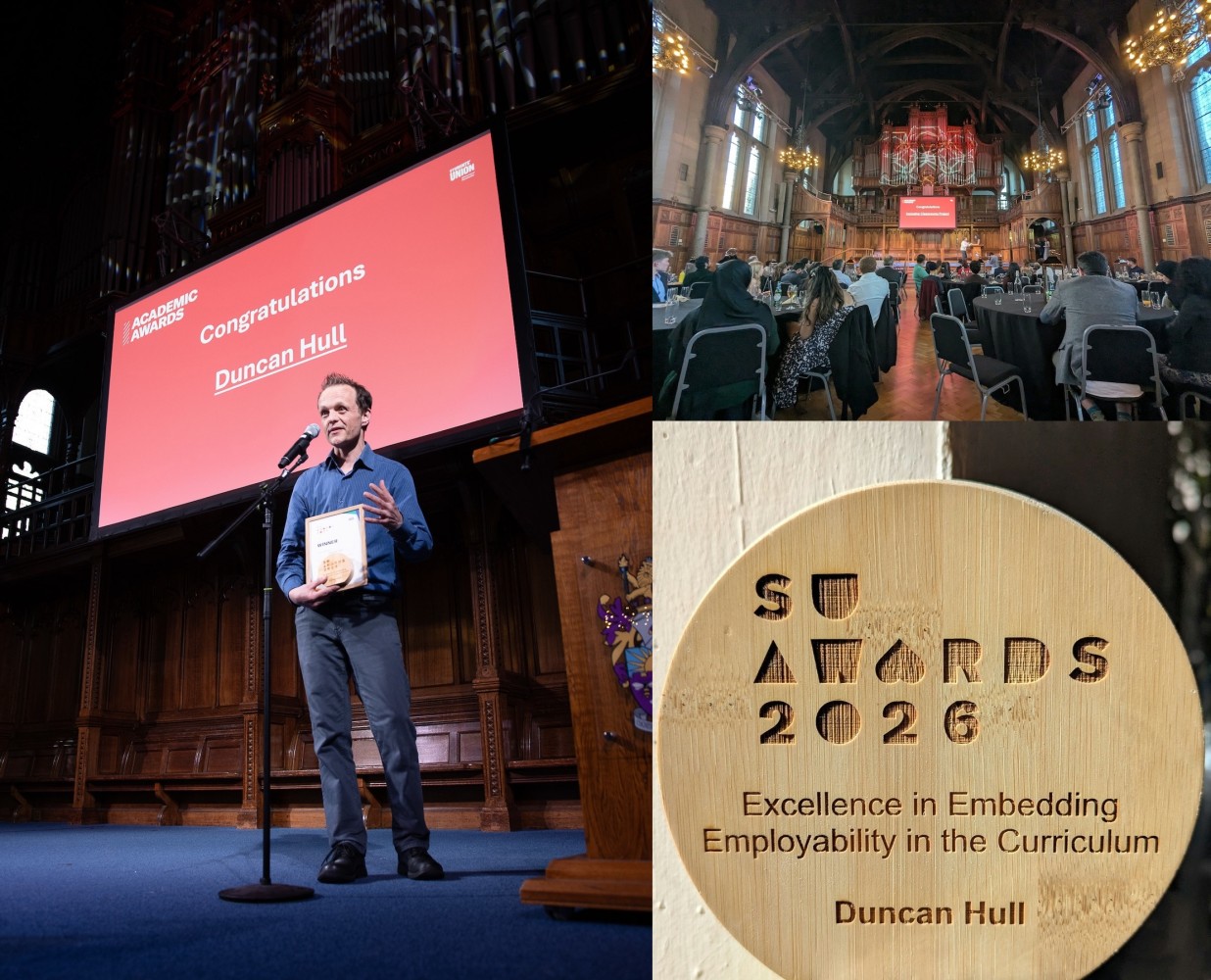
So it’s really reassuring to get positive feedback when we are teaching things well. Thanks to the anonymous students who nominated and voted for me for the Excellence in Embedding Employability in the Curriculum award. I almost blubbed uncontrollably on stage like Gwyneth Paltrow when this nomination text was read out by Freya Weetch: 😭
“Duncan Hull is an outstanding Employability Lead who goes above and beyond to prepare students for the world of work. From connecting students with industry to creating exciting opportunities and careers events, he inspires confidence and ambition at every step. His energy, dedication, and genuine passion for student success have made a huge impact, empowering students to step boldly into their future careers. ”
Those very kind and moving words from an anonymous student will help me stay motivated and remind me why I get out of bed in the morning. Thanks to Alexandra (Lexie) Baynes, Krystyna Drewenska, Freya Weetch, Alec Severs, Amrit Dhillon, Bo Ana Murphy, Ben Ward, Katie Jackson and everyone at the University of Manchester Students’ Union (UMSU) for hosting these events, past and present. It felt appropriate to receive this award in the magnificent Whitworth Building where thousands of former students like me have graduated accompanied by their friends, supporters and families. It was also an opportunity to speak in front of the senior leadership of the The University of Manchester including Duncan Ivison, Jenn Hallam, Peter Green, Colette Fagan – thanks to Andrew Mawdsley for recording my fifteen seconds of fame. 🙏
Congratulations and jubilations to my fellow nominees and laureates: Hanan El-Wandi, The Diversify Politics Society, Dr. Pietro Paolo Frigenti, SFHEA, CMktr, The University of Manchester Women In Business Society, The University of Manchester Neurology and Neurosurgery Society, Alejandra Vicente Colmenares, Transforming Assessment Together, Breaking the Barrier to Let a Voice Out, Lei Zeng, The Inclusive Classroom Project, Alan Davies, Harsath Udayakumar, Vuyo Dube, Maria-Michaela Vierita, Matt Dalgliesh, Yuxin Yan, Abdelrahman Shaaban, Ishnoor Kaur, Fiona Chan, Anahita Jayaram, Christian N. Nwosu, Brogan Pritchard, Md Faisal Mahmud, Adella Tobing, The North West Biotech Initiative, Laura Swain, Adam Danquah, The University of Manchester Faculty of Biology, Medicine and Health Maria Mercè Canal, Sohini Biswas, Carl M. Kulimushi, Anna Hood, PhD, Sam Rodgers, Louisa Shirley, Samhita Mukherjee, Lorraine Brobbey, Clara Dawson, Danny Dresner FCIIS, Doron Cohen, Neil Morrison, Saralees Nadarajah, Alison Hassett, Abdullatif Alfutimie, Venus Muscat, Stephen Craig, Sam Thozer, Mariangela D’Acri, Abbie Jones, Hala Shokr, Michele Caprio, Paul Tobin and Dr. Miri Firth PFHEA. Special thanks to Miri wooping loudly and gratifyingly when the winner was announced. 🏆
Teaching is a team sport, not an individual one. Teaching professional skills by embedding employability in the curriculum is no different, we’ve had ongoing help from a large team of people from industry and academia. I’d like to thank the employers in our industry club, particularly Apple, Arm, Booking.com, BNY the BBC, Bloomberg, Couchbase, IBM, Apadmi, Matillion, Bet365, Amazon Web Services (AWS), Google, SeeChange Technologies, Morgan Stanley, Roku and many other members of our industry-club.cs.manchester.ac.uk who’ve helped us run a range of events for students in Computer Science. Many of these events have been organised in collaboration with our fantastic student societies UniCS Manchester, The Manchester Intelligence Society (MIS), The Manchester AI Society, RoboSoc (University of Manchester Robotics Society) and MathSoc Manchester who remind us what the joy of learning as part of a community is all about.
They’ve been a key part of what we’ve managed to offer students alongside Coding Your Future, the Wednesday Waggle with help from Imago Software (with Suzanne Embury), the Masood Entrepreneurship Centre (with Dan Syder) and UoM alumni. None of this would have been possible without ongoing support from my colleagues. Thanks to everyone who leads and delivers on the Herculean task our teaching and assessment Paul Nutter, Andrew Stewart, Steve Pettifer, Gareth Henshall, Stewart Blakeway, Louise Walker, David Petrescu, Sean Bechhofer, Uli Sattler, Andrea Schalk, Markel Vigo, Bijan Parsia, Toby Howard, Afrodite Galata, Tom Carroll, Chris Page and everyone else in the Department of Computer Science at The University of Manchester. 🐝
We’ve also been supported by Professional Services (PS) staff across the University, particularly Mabel Yau, Ruth Maddocks, Cameron Macdonald, Lisa Wright, Nanna Pedley, Caroline Whitehand, Penney Gordon-Lanes, Ben Carter, Amanda Conway, Helen Frost, Anna Lomas, Jenny Sloan, Kelly-Ann Mallon and everyone in the careers service.
Our teaching and research in Computer Science is part of something bigger, that students don’t really see directly: the School of Engineering (SoE) and The University of Manchester Faculty of Science and Engineering. Thanks to leadership and management from academics and administrators alike, including Sarah Cartmell, Sarah Sharples CBE FREng, Carly Peesapati, Akilu Yunusa-Kaltungo (PhD CEng FIMechE FHEA) and many more.
Last but not least, I’d like to thank the Teaching and Scholarship Network (TaSN) who help all staff across the University to improve the quality of teaching and learning, wherever they work and whatever they do. The TaSN is led by Hannah Cobb and Jenni Rose NTF PFHEA with help from Eleanor Aspey, Helen Baxter, Elaine Clark, Karen Lander, Jen McBride, Dr Rachel Parker-Strak, Thomas Rodgers, Reimala Sivalingam, Rachel Studd, Lisa Taylor, Holly Dewsnip and Nick Weise PFHEA IFNTF. If you care about improving teaching, you should come and join us in the TaSN. We host regular events online and in person which anyone from The University of Manchester (and beyond) is welcome to join. Our next TaSN meeting is Thursday 7th May, see the Teaching and Scholarship Network (TaSN).
You can find out more about the UMSU awards, which continue this week with the Arts and Media Awards on Thursday 7th May at manchesterstudentsunion.com/awards.
(You can cite this article using its full Digital Object Identifier DOI:10.59350/1y79e-6mn80 or the shorter doi.org/q6bx, both of which identify the same article. A modified version of this article is available at linkedin.com/pulse/why-learning-so-challenging-duncan-hull–i4qlc)


Leave a Reply