O'Really?

July 28, 2026

Celebrating Teaching & Learning at the “Glastonbury Festival of Scholarship” 2026

Filed under: education — Duncan Hull @ 1:53 pm
Tags: , , , , , , , ,

Every year hundreds of my colleagues gather at a conference in Manchester to talk about teaching & learning at the Glastonbury Festival of Scholarship. It’s not actually called that but since there’s no actual Glastonbury Festival of Contemporary Performing Arts in this fallow year of 2026, I’m looking for alternatives to the midsummer Somerset vibes from my neck of the woods down in the West Country. Festivals and conferences have some similarities, so let’s see where this musical analogy works, and where it breaks, while reviewing some of this years conference highlights.
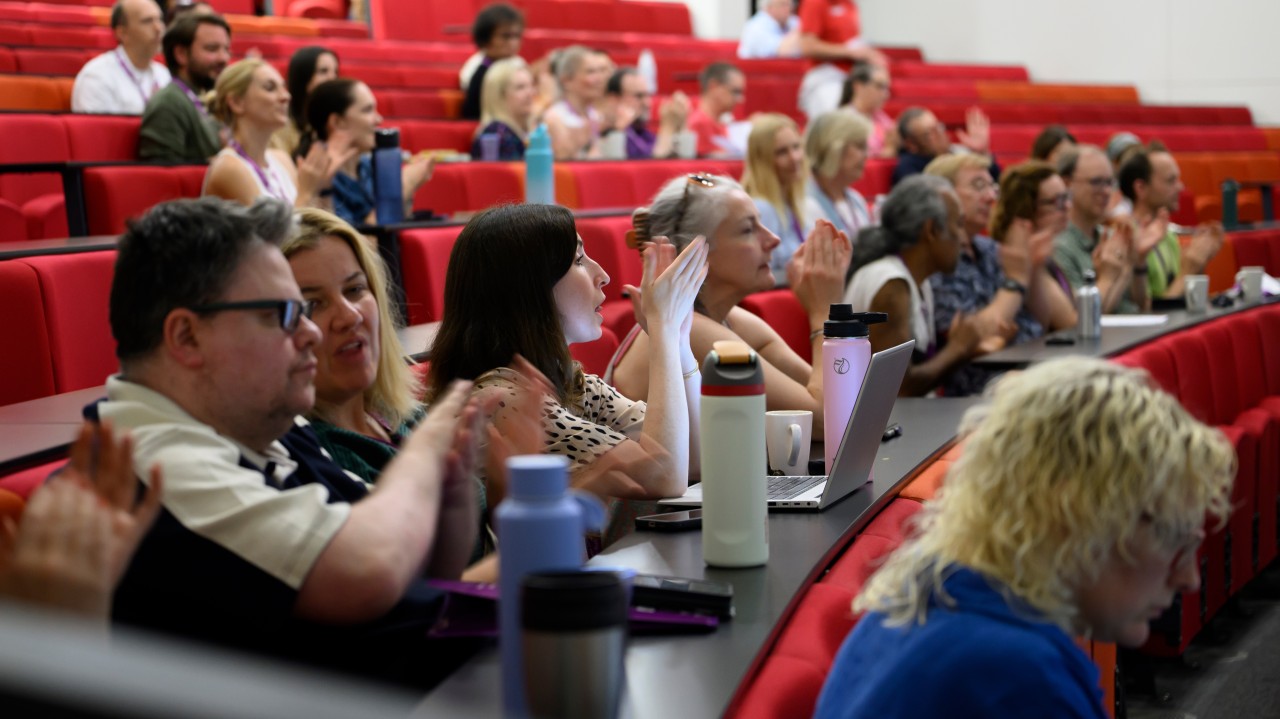
Figure 1: Delegates at the ITL Conference, if this is the Glastonbury Festival of Scholarship then University Place (pictured) is the Pyramid Stage

This particular annual festival and conference showcases some of the scholarship at The University of Manchester that makes teaching and learning better for everyone: students, teachers, staff, collaborators and employers. It’s called the Institute of Teaching & Learning (ITL) Conference. While Glastonbury passed its 40th iteration and 50th anniversary in 2025, the ITL conference is just getting going, with the 2026 conference being the 4th event in as many years. With more than 45,000 students on 1,000 different degree programmes at the University, there’s a lot of ground to cover during the two days. There are seven parallel tracks (or stages if you prefer) spread across several floors in University Place. This means you can only realistically expect to see about a seventh (~15%) of what’s going on while missing the other ~85% of the conference. I went to more than twenty presentations, including keynotes and plenaries. What’s ITL conference like and is it worth attending? How can you join in? Can you see any decent performances? How could it be better when it returns in 2027? Here’s some highlights from the 15% of the conference I managed to sample.

Partner-Enabled Learning

A central focus for this years’ conference was partner enabled learning where students work with employers, public bodies and community organisations in cross-disciplinary projects as an assessed part of their course. A good example of this is the partnership between the Manchester United Foundation, Oxfam, Age UK and the Department of Materials where Lindsay Pressdee, Dr Jo Conlon and Dr Amy Benstead have been teaching students about the circular economy with community embedded learning on the BSc Fashion courses. [1]

It has been estimated by This Is FC88 that 20 million shirts like the one in Figure 2 have been discarded since the FIFA World Cup 2026™ – Canada, Mexico and the United States finished last week, see for example this post from Joanna Czutkowna FRSA. In 2026, around 30 final year students will complete a course called Sustainability in Action where they will upcycle unwanted football shirts following on from earlier pilot feasability projects. Recycling all this “waste” is challenging not just because of the volume of it, but because there are strict rules about what can be done with logos and the synthetic material can be much more difficult to work with than natural fibres like cotton.

Figure 2: Three Lions On A Shirt, hung out to dry by Argentina. Sixty years of hurt, never stopped me dreaming. It has been estimated that that 20 million football shirts like this one will be discarded after the FIFA World Cup 2026

Another example of partner enabled learning was provided by Sarah Knighton, Harsha Parmar, Sadia Ibraham and Eisha M. with the Greater Manchester Cancer Alliance who have been teaching students on the Master of Pharmacy (MPharm) course. Trainee pharmacists act as a front door for patients talking about cancer, before they speak to a doctor. Pharmacists are the front line for NHS England, because they are often the first person a patient will talk to. See co-created learning through lived experience and partner engagement. [1]

From a pharmacy we moved to aphasia, an impairment in a person’s ability to comprehend or formulate language. Molly Smithies, Caroline Sutton and Steph Greenwood-Davies described The Connections Café: A service learning model for inclusive communication and community. [1] The cafe trains future language therapists on the BSc Speech and Language Therapy course who support people in the local community with language difficulties.

In her plenary Helen Walkington talked about partner enabled learning in the context of undergraduate research projects such as those found in the Get Published! initiative at Oxford Brookes University. GetPublished! supports students in developing research literacy and communication skills. Another example is GeoVerse, an undergraduate journal for Geographers. Undergraduate research has highlighted ten salient practices for providing robust and high-quality learning published by Centre for Engaged Learning at Elon University. Around 5% of undergraduate students at Oxford Brookes publish their research in GetPublished! For an example, see creating a prototype of a smartphone application to track the progress of individuals recovering from traumatic brain injury (TBI) in partnership with Oxford Head Injury Services.

Jennifer O’Brien described her work with the University Living Lab where research projects are framed within the United Nations Sustainable Development Goals. The project returns quality research to partner organisations who provide problems for students to work on including from Manchester City Council, The Old Abbey Taphouse and many others, see University Living Lab: Addressing social and environmental challenges through existing assessment. [1]

Representing the Department of Computer Science at The University of Manchester, I gave a presentation on partner enabled learning describing our experience with building and running a mentoring scheme for students learning software engineering. We started this ten years ago by partnering with local employers starting in Manchester (Graphene Valley) including Booking.com, Arm, JLR, IBM, Siemens, the BBC and as the program got bigger we’ve had mentors from further afield including Apple, Meta, Google, Microsoft and Amazon Web Services (Silicon Valley). Thanks to all our mentors which you can find out more about at industry-club.manchester.ac.uk/mentoring.html and in the paper. [2]
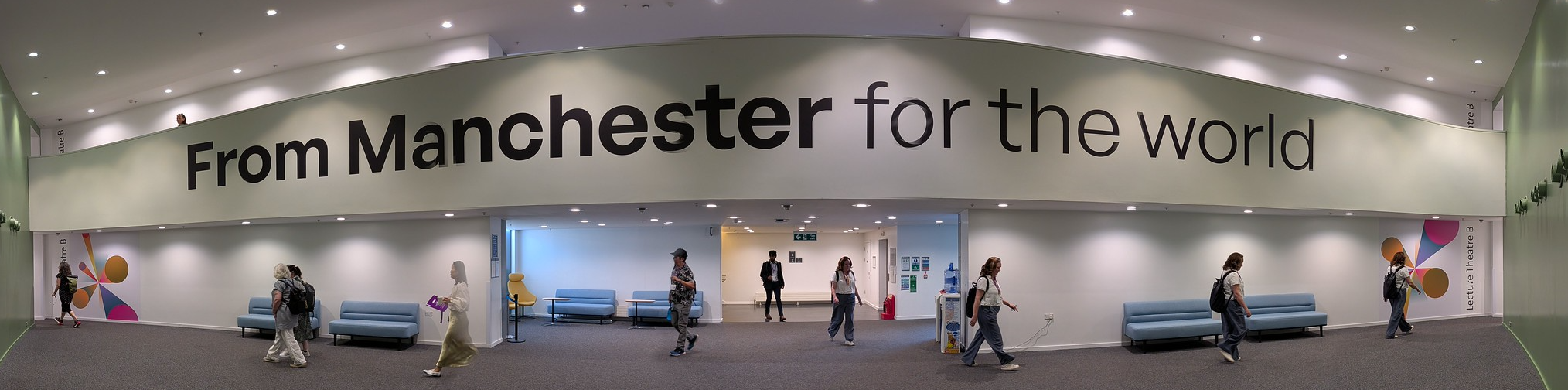
Figure 3: From Manchester for the world, taken from the Manchester 2035 strategy displayed in University Place. If you look closely, this panoramic picture has cloned Rachel Studd four times!

The AI in Higher Education Permathread

Predictably Artificial Intelligence (AI) dominated many of the talks and not just those where it was the theme of the session, it’s the permathread that’s here to stay whether we like it or not. Many delegates reported grappling with thorny and wicked problems that generative AI presents in Higher Education, particularly around academic integrity. What changes need to be made to teaching to help students use AI in a professional, responsible way that enriches rather than detracts from their learning? What skills should teachers focus on empowering their students with? Which are the most important and why? There are lots of difficult existential questions that have no easy answers.

Rather than using Microsoft CoPilot now available across the University, several groups reported making their own custom Large Language Models (LLMs) tailored to specific teaching tasks. An example was presented by Paul Baguley, Ian Stewart, Louise Edmondson, Auzair Khan, Ziru Tao and Linxi Xu. They’ve created tools based on Retrieval-Augmented Generation (RAG) for use in teaching the management of projects in collaboration with Sodexo, Bentley and Rolls-Royce, see a research informed generative AI framework to provide context in project management. [1]

Dr Homa Molavi and Dr. Kamal Qazi MAPM, SFHEA presented a Cross institutional AI-Driven Framework [1] while Salman Shahid talked about Evaluating Generative AI potential and integrating it in Chemical Engineering Education [1]. Lightning talks are a good way to see lots of stuff in a short period of time, here’s some I managed to see on AI:

  • The use of AI tutors in science and engineering with Daniel Engstrøm, Christina Picken and Patricia Munoz-Escalona. Good teaching often involves asking diagnostic questions of students using the socratic method. Daniel and co have created custom AI’s created with “personalities” to do some of this questioning. [1]
  • Writing an L-AI (lay article for the layperson) with Dirk Engelberg, Alison Harvey and Katie Moore gave an opportunity for students to have a discussion about boundaries and professional AI use by peer-reviewing an AI generated article. One problem is that with model capabilities rapidly changing, course materials need rewriting every year because what can’t be done by AI one year, is trivially done by AI the next. [1]
  • Teaching programming in the AI era with Lijing Lin. Lijing is teaching diverse students without a technical background to write code. The foundations still matter, even though a calculator can crunch numbers for you, students still need to understand what the calculator is doing on their behalf. There are big risks with AI in programming which include students trying to skip code comprehension. [1]
  • Designing AI-resistant Assessment and Perry’s scheme of Dualism, Multiplicity, Relativism, and Commitment within Relativism with Professor Jenni Rose. Jenni encourages her students to realise that sometimes there isn’t a “right answer” using a framework provided Perry’s scheme. [1]
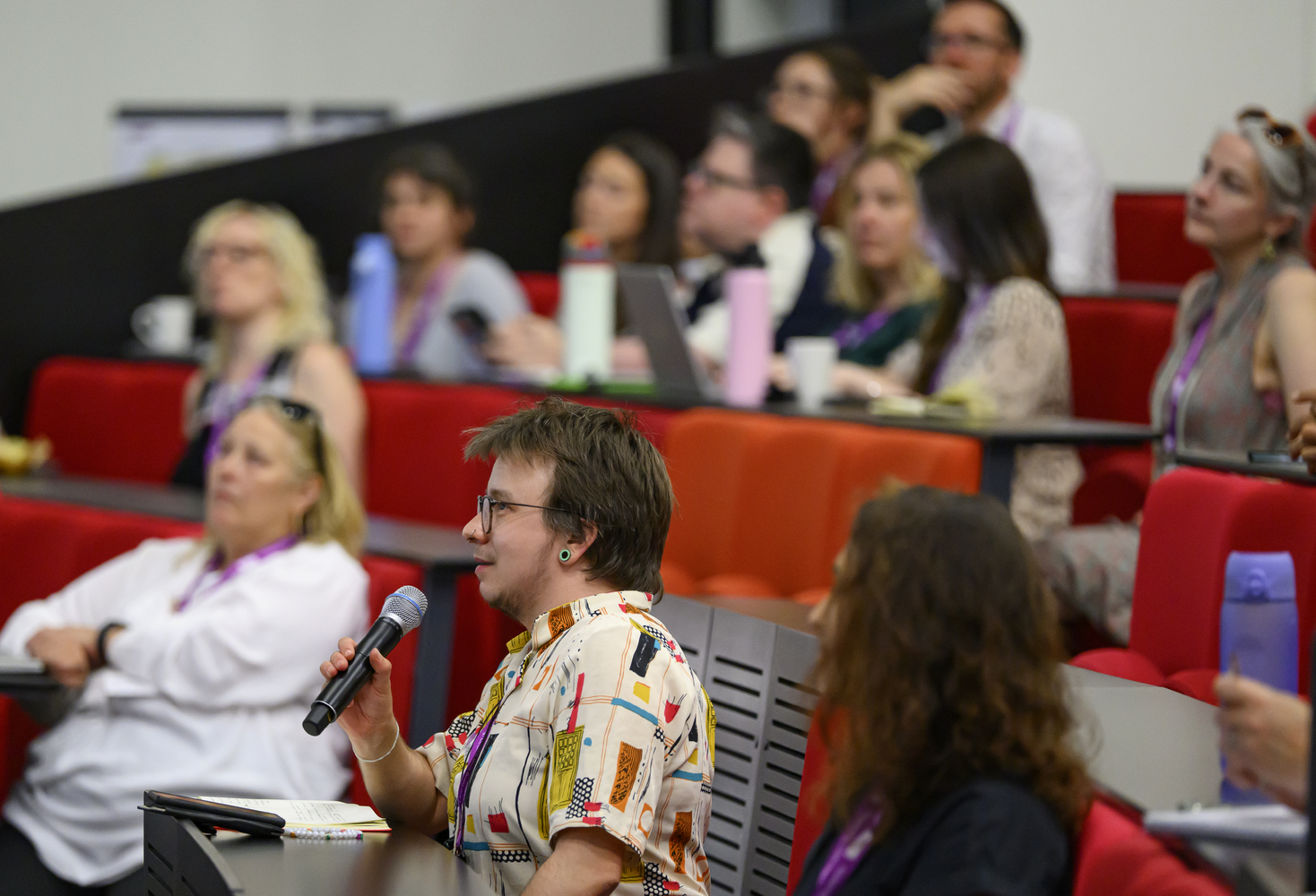
Figure 4: Questions, questions so many questions! Many of the talks were accompanied by lively Q&A sessions

Sense of belonging and social justice

Sense of belonging and social justice were recurrent themes, two presentations I enjoyed on this were

  1. Belonging, Voice and Agency: Co-designing mentoring with international students with Lei Zeng, Wennie Subramonian and Lalrinzuali Fanai described creating materials to train 20 mentors working with 60 mentees for students outside the UK. Subjects include “speaking Manc”, travelling in Manchester, understanding the NHS – all things that UK students take for granted, but might seem incomprehensibly quirky and British to international students. I look forward to seeing this material when it is publicly available in the autumn. [1]
  2. In fashion again, Lisa Taylor talked about the KÁYÒMI Digital Sustainability Platform this looks like it would make a good student project for the Imago Software team. The project partners with African industry stakeholders, KÁYÒMI – ‘Cherish Our Garments’, a circular fashion initiative developed in collaboration with BITTANY. [1]

Which brings us full circle back to partners again …

Returning to partnerships and authentic assessment

Partnerships can make assessment more authentic, and authentic assessment is a subject in its own right. Two presentations caught my eye:

  • Elika Aminian, Louise Walker and Rose Wagstaffe presented work on developing an authentic coursework assessment for actuarial science. [1] I didn’t realise the maths degree had so many flavours, it’s available with Physics, Computer Science, Philosophy, Finance and Actuarial Science.
  • Stewart Blakeway and Uli Sattler presented work on scaling authentic learning: evaluating a large-cohort poster showcase in undergraduate Computer Science. [1]There was an interesting discussion on if this exercise should be formative or summative and if some kind of publication was possible.

The conference finished where we started with a final plenary with John Holden, Samira Kaissi from Unit M, George Moulton and Lee Pugalis, chaired by Jenn Hallam shown in figure 5.
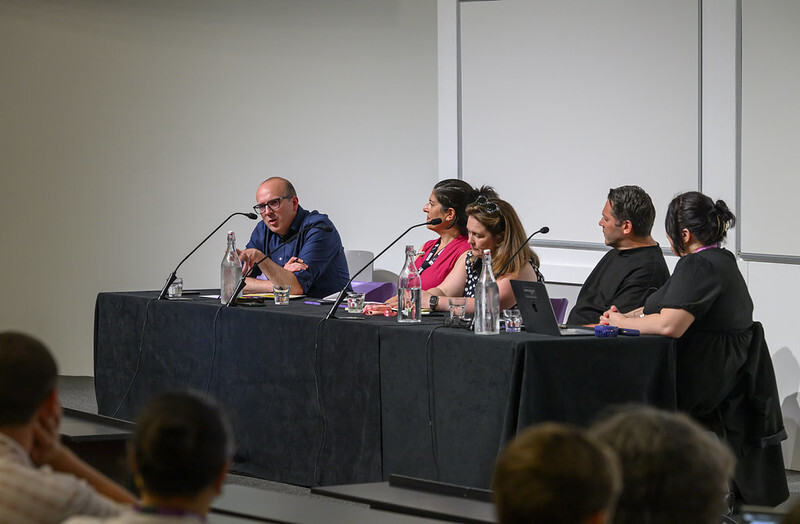
Figure 5: From left to right John Holden, Samira Kaissi, George Moulton, Lee Pugalis and Jenn Hallam discuss Innovation in Action: Reimagining the Student Experience.

The panel explored how teaching and innovation can together become a defining feature of the student experience at the University of Manchester. The session examined how partner-enabled learning, entrepreneurship education, interdisciplinary collaboration and real-world challenge-led teaching can help prepare students to thrive in a rapidly changing economy and society. The panellists discussed how the University can create the culture, partnerships, and environments needed to turn learning, research and ideas into real-world impact within the context of the Manchester 2035 strategy.

One question I raised was, how do we mitigate the inherent risks to employers, students and staff associated with partnerships? What are the resources needed to make partnerships work at scale and who is going to provide and manage them? Part of the answer is, to manage expectations about what is required of partnerships and what they can deliver in practice.

How much is ITL actually like Glastonbury festival?

So, back to our festival analogy. How similar is the ITL conference to a musical event like Glastonbury Festival of Contemporary Performing Arts?


Figure 6: How much are conferences like festivals? They have some similarities but many differences. CC BY-SA picture of crowd gathered at Glastonbury Festival by Czampal via Wikimedia Commons w.wiki/SgyH

There are some similarities between Glastonbury festival (figure 6) and the ITL conference:

  • They both involve performers trying to connect with their audience on multiple stages of various sizes. Some performances were better than others, some of the artists you’ve probably heard of, many of them will be new to you
  • There is too much at both events to see in the short time available, seven parallel tracks at ITL and hundreds of stages at Glastonbury. This is a feature not a bug!
  • It’s better to attend the live event if you can, festivals and conferences are about the experience of being there and joining in the conversation, rather than catching up later, but see the Zoom note below.
  • Just like it’s easy too find some new music you like at Glastonbury, you’ll make lots of new connections with your colleagues at ITL, be exposed to some inspiring pedagogy that you can take away and use in your practice afterwards

But there are significant differences between them, because a conference isn’t like festival in lots of ways:

  • The ITL conference is free to attend for UoM employees whereas Glastonbury requires you to take out a bank loan or remortgage your house in order to buy a ticket, provided you can even get hold of one.
  • While there was lots fun to be had at the ITL conference, festivals are mostly about recreation whereas conferences are mostly about work. There is no music, there was no stage diving, crowd surfing, piggy-backing, camping and home-made flag-waving commonly found at music festivals, at least not in the sessions I attended! Maybe we should change this next year?
  • If you want to get up on stage and tell everyone about your work, that’s probably easier to do at the ITL conference than Glastonbury festival, unless you’re already an established superstar with a record deal, back catalogue and huge fanbase
  • If you’d like to get involved in ITL in 2027, there are lots of positions available on the organising committee and peer review panels, contact the organisers for details
  • The food is much better at ITL than Glastonbury. I thought the food was good, much better than over-priced junk fast food you find at music festivals from mobile vendors.
  • The toilets are much better at ITL than Glastonbury! Thankfully there are no long drops or portaloos, just well managed and clean facilities provided by the University. When you go home after the event you can have a proper shower and sleep in a decent bed. Phew!

So ITL is like a musical festival in some ways but not in lots of others.

How can ITL be better in 2027?

I thoroughly enjoyed the ITL conference, I’ve been every year for the last four years and I always meet interesting new people doing great projects, as well as catching up with old friends and getting the chance to share and reflect on my own practice. It was really refreshing to see members of the University executive team at the conference taking part this year. They didn’t just make a token appearance and then leave shortly after. The executive team took the time to listen to what people are talking about and contributed to the dialogue. Thanks to Duncan Ivison, Patrick Hackett, John Holden, Eleanor Morrissey FCIPD MA and Jenn Hallam for properly joining in.
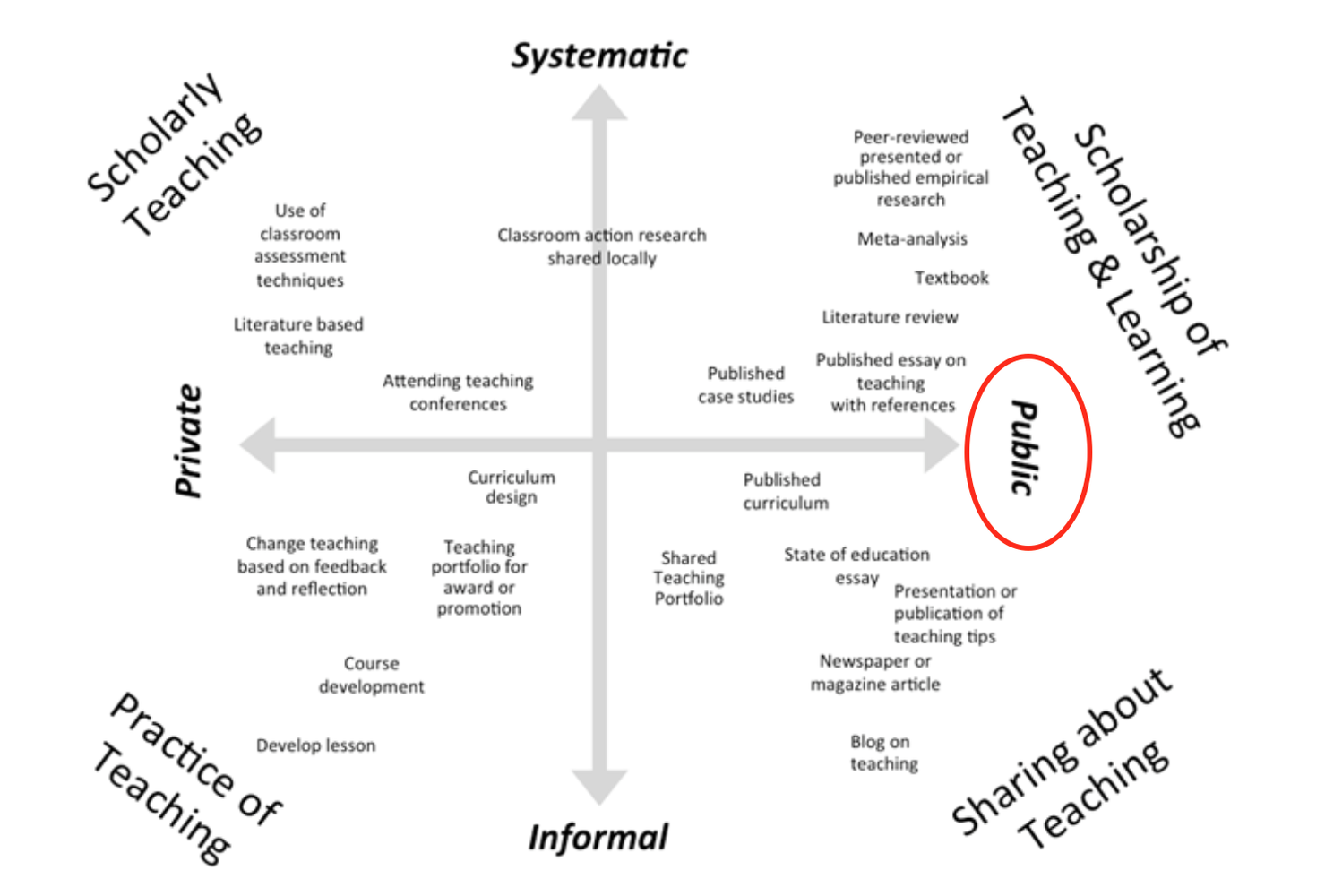
Figure 7:The Dimensions of Activities Related to Teaching (DART), note the PUBLIC dimension, an important feature of scholarship is PUBLIC-ation. Image adapted from [3]

I’d like ITL to carry on growing and improving year on year, a bit like Glastonbury has done since starting in 1970. In order to continue growing, the ITL conference needs to:

  • Publish more of the proceedings. The abstract book [1] is handy, but it captures a small fraction of the data and Scholarship of Teaching and Learning (SoTL) from the conference. Authors should be publishing their slides too, figshare.manchester.ac.uk would be a relatively easy way to do that. Once authors have their paper accepted for publication, they could upload it to the repository, see an example at [2]. Scholarship is not really public if it isn’t a fully published PUBLIC-ation! An abstract is necessary but not sufficient, see figure 7.
  • Tell us where the catchup is: When you miss an act at Glastonbury, you can catch-up later on BBC iPlayer bbc.co.uk/glastonbury. Some of the ITL talks were streamed using Zoom, but if they were recorded, I can’t find them published anywhere. There are a few I would liked to have seen from the 85% of the conference I wasn’t able to attend, speaking of which…
  • Zoom out because we should stop using Zoom, we’ll probably be forced to next year anyway when IT services follow through on their warning about switching to Teams by the end of 2026. Some combination of meetings, webinars, and town halls on Microsoft Teams / 365 should do the trick – and this means there’s no more tedious zoom logins to worry about.
  • Anonymously peer-review Use better peer reviewing tools As the conference grows, it gets harder to get your paper accepted. More submissions are great, and will hopefully increase the quality of the conference to. But quantity is harder to manage, especially when it’s anonymously peer reviewed. There are good, free and cheap tools to do this like EasyChair see easychair.org. A Microsoft form populating an Excel spreadsheet isn’t adequate for managing conference proceedings on this scale – and it means the peer review is not anonymous. Post publication update, when I wrote this, I got the facts marked in strikethrough wrong, the conference IS anonymously peer-reviewed
  • Help us scale it up. It’s great to hear about innovative pedagogy which often occurs in small classes of less than 30 students. Much of our teaching at the University of Manchester involves classes much much bigger than that. it’s not unusual for classes to have between 300 and 500 students in first and second year. So a key question is, not just how do we teach innovatively, but how do we innovate at scale?
  • Increase attendance and participation. Many colleagues don’t seem to know that ITL happening. Others aren’t willing or able to attend. While it was reassuring to see Pavlos Petoumenos and Stewart Blakeway, many of my Computer Science colleagues who would have attended were absent. For example, neither our Discipline Head of Education (DHoE) Andrea Schalk or Teaching & Learning Enhancement Lead (TLEL) Gareth Henshall have been able to attend any of the last FOUR conferences because it clashes with exam boards in Computer Science. These dates are fixed a long time in advance of the ITL conference. I might have missed them, but I didn’t see anyone from the Department of Physics and Astronomy (random example) – do they even know it is happening? Anna Scaife for example, is publishing lots of interesting positive (and evidence based) material on independent learning for undergraduate students at howtobeastudent.substack.com. Why aren’t there more people like Anna at the ITL conference?

So ITL is great, but there’s plenty of room for improvement next year.

Thanks Jenni, Hannah, Sarah, Holly, Freya and Nahid

If my criticism comes across as being ungrateful, I’m trying to be a constructive and critical friend so we can put on an even better event on next year. I’m very grateful to the huge team of people that worked extremely hard to make the conference happen again. Thanks Jennie Blake, Hannah Cobb, Sarah Dyer, Freya Corrywright, Holly Dewsnip, Nahid Farzalizadeh and many more for putting on another fantastic event. Thanks also to the photographer who took most of the photos that I’ve used to illustrate this report.

I look forward to ITL returning in 2027, hope to see you there. In the meantime, join us at the Teaching and Scholarship Network (TaSN), we’re a friendly bunch and our members include inspiring people like Karen Lander, Rachel Studd, Nick Weise PFHEA IFNTF, Reimala Sivalingam, Sally Hickson, Lindsey Jones, Thomas Rodgers, Grazyna (Grace) Lipowska-Bhalla, PhD, SFHEA, Anna Goatman, Ali Owrak, Dr Rachel Parker-Strak, Doron Cohen, David Schultz, Nikesh Solanki and many more.

Come and join us! We organise and host regular events throughout the year about the Scholarship of Teaching & Learing (SoTL), in between the big Institute for Teaching and Learning (ITL) annual event.

References

  1. Jennie Blake (2026) University of Manchester Teaching and Learning Conference 2026 (Abstract Booklet) figshare DOI:10.48420/32802033
  2. Duncan Hull, Suzanne Embury, Tom Carroll, Christopher Page and Ben Possible (2026) Partner-enabled learning with local and global software engineers from Manchester to the world, Figshare DOI:10.48420/32745048.v2
  3. Beth Kern, Gwendolyn Mettetal, Marcia D. Dixson, and Robin K. Morgan (2015) The Role of SoTL in the Academy:Upon the 25th Anniversary of Boyer’s Scholarship Reconsidered Journal of the Scholarship for Teaching and Learning, Vol. 15, No. 3, pp. 1 – 14. doi: 10.14434/josotl.v15i3.13623

You can cite this article using the full DOI:10.59350/yp7qd-g4532 or the shorter doi.org/rhmn, both of which identify this same article.

This post is also published at linkedin.com/pulse/celebrating-teaching-learning-glastonbury-festival-2026-hull–dvjae


July 4, 2026

Thanks to everyone who helped me graduate today

Today is the 4th July, a day for celebrating independence. Alongside those who graduated with me in the Whitworth Building, I’m celebrating independence. Not national independence marked by independence days around the world, but independence of thinking and independence of learning. These are two of the most important things and education can give you. I’m grateful to have received these gifts from my teachers and fellow students.

Figure 1: Shaking hands with Tony Trinci at a graduation ceremony in the Whitworth Building at the University of Manchester on 4th July

Studying any subject for an extended period of time can give you two things that help you become more independent.

  1. Better critical thinking skills, since it’s the 4th July, let’s call “critical thinking” free and independent thinking skills. Raise a glass to freedom, something they can never take away.
  2. Bigger and more diverse social networks of friends, professionals, mentors, peers, role-models, task masters, teachers, influencers, experts, leaders, colleagues and collaborators that you meet in the communities you are part of. The teams you join at University are likely to be bigger and more diverse than those you were previously a member of.

If you’re graduating this year, you might be wondering what all those years of study were all about, particularly now that you’ve finally got some time to properly digest and reflect on your experience.

What was that all about? Are you stuffed? Was it worth it?

Studying anything is a like having a large meal. When you finish, you feel so full that couldn’t eat another thing, not even a wafer thin mint. Instead of having a bellyful of food, your head is crammed full of ideas that you learned in labs, lectures and across campus, from the whole community around you. Some of these ideas are quickly digested, others take longer. They all become a part of you.

Nourishing mother is a phrase used to describe what every University does, usually expressed in latin: alma mater. Our metaphorical mothers should be plural and neutral, not singular and gendered because we are nourished by many mothers, fathers, brothers, sisters, siblings, cousins, uncles, aunts, grandparents and so on. There’s a whole intellectual family around us in education, so alma familia: nourishing family, would be a more accurate description of what Universities, colleges and schools are actually doing.

If you’re graduating now, you might not feel like eating any more, but you can always come back later in the restaurant of lifelong learning when your hunger returns. There’s always something new on the menu, some “dish” you haven’t tried yet. The door is always open to learning and it doesn’t have to be in academia, you’ll learn just as much in the workplace.

Figure 2: Sat in the audience with my bestie Chris listening to Tony Trinci talk about student-staff ratios. I wonder what he’d make of the ratios and numbers today?

Thanks, plant scientists for your nature and nurture

My undergraduate degree is a BSc (Hons) Applied Plant Sciences, when you tell people that, the usual reaction is WTF? [1] The Applied bit is what the University now calls Industrial or Professional Experience (IE), as part its drive towards more Partner-Enabled Learning in the Manchester 2035 strategy. The discipline of Plant Sciences used to be called Botany, but since that usually invokes images of skipping through meadows, pressing flowers and speaking Latin binomials, it’s usually known as Plant Sciences because that sounds more modern. We did skip through meadows and press flowers, which I can thoroughly recommend, but it was only 10 credits out of 360 total. The rest of the degree studied the growth, reproduction and evolution of plant life at every level from the molecular, biochemical, genetic and cellular through to physiological and ecological over the last 3.5 billion years of life on earth.

Another way of describing what a degree means is to thank all the people who taught it. So, thanks to Tony Trinci (microbiology), Bob Callow (Genetics), Jackie Potter (final year project supervisor), Liz Sheffield (botany), Joan Watson (palaeobotany) [2], Keith Gull (molecular biology), Amanda Bamford (physiology), Laurence Cook (genetics), Robin Baker (evolutionary biology), Sean Edwards (systematics & taxonomy), John Lee (ecology), John Tallis (ecology), Michael Emes (biochemistry), Caroline Bowsher (biochemistry), Cliff Bray (biochemistry), Allan G. Lowe (biochemistry), Roland Ennos (biomechanics), Phil Harris (placement year), Malcolm Press CBE (ecology), David Sigee (botany), Harry Epton, Dick Benton, Robert W. Foster (computational biology), Fred Rumsey. Thanks to all the teachers whose names I can’t remember. This is slightly embarrassing but it was a while ago! The unknown lecturer from the Department of Mathematics taught us differential calculus and statistics. Some more cell biologists & geneticists from first year are a hazy memory, an economist from Humanities at The University of Manchester taught us some environmental and agricultural economics. An army of graduate teaching assistants (GTAs) and technicians made the labs work. There were lots of wet labs in vivo and in vitro, with a few computer labs in silico and some field trips too. Then there’s all those administrators in the back office who kept the wheels turning. Different people are affected by different teachers in different ways. For me, out of all the teachers above, those that had the biggest influence on me were:

  • Tony Trinci (1936-2020) Pro-Vice-Chancellor (PVC) at The University of Manchester, pictured above. Leaders are often sharp people and some leading Professors have sharp elbows and sharp tongues to accompany their sharp minds. Not Tony. He was approachable and treated students with kindness, patience and respect, while also being a razor-sharp leader in his field of mycology. Thanks Tony and RIP.
  • Liz Sheffield: Associate PVC and Emeritus Professor and Dean at the University of Liverpool. Liz successfully drilled into many undergraduates like me the importance of written English, not just as a tool for communication but as a tool for thinking. Some of this was done using the Biological Sciences Review a magazine distributed to thousands of A-level students across the UK and beyond. Liz lead a fantastic course called Photosynthetic Organisms where we used microscopes to study alien lifeforms like Volvox, Chlamydomonas reinhardtii and many more weird and wonderful creatures. She also supervised my dissertation on how cells know their arse from the elbow which went by the more scientific title of Signal Transduction During Embryogenesis in Fucoid Algae. [3] It’s one of the pieces of work I was most proud of, largely because Liz gave me honest, personalised, timely and constructive feedback on it. She also ran a final year course unit in the style of a journal club, which was a big revelation for me – another aha! moment. This was the inspiration for UK ACM SIGCSE journal club, we meet on the first Monday of every month, join us at uki-sigcse.acm.org/journal-club. Thanks again Liz.
  • Michael Emes: Emeritus Professor at the University of Guelph near Toronto in Canada. When a subject gets difficult and technical, as biochemistry sometimes does, it can be tempting to dumb it down to make it more accessible for learners. Making a subject easier might improve your course evaluations, National Student Survey (NSS) scores and your institutions ranking in the endless jockeying of league tables. Mike Emes never did this with his teaching, and his labs were great, particularly the experimental study of an antiporter known as the triose phosphate translocator, an important membrane protein crucial to energy flow in chloroplasts. [4] This was authentic assessment at its very best, hard work and challenging, but worth the effort required of students and teachers alike. Learning is hard, and sometimes you’re going to have to suffer. There aren’t many short cuts that are worth taking. Thanks Michael for not taking short cuts.
  • Malcolm Press: Vice Chancellor of The Manchester Metropolitan University. Ecologists like Malcolm often go on interesting field trips and sometimes they take you with them. Malcolm led field trips and residentials to the Mediterranean and sub-arctic which were life changing experiences for many students including me. Thanks Malcolm.
  • Jackie Potter: Dean of Academic Innovation at the University of Chester. I was a humble field assistant to Jackie’s postdoc research at Abisko Scientific Research Station in sub-arctic Sweden which was run by The Royal Swedish Academy of Sciences. This was by far and away one of the best jobs I’ve ever had. Jackie had the unglamorous job of supervising my employment, reading my final year project report and giving me feedback. Thanks Jackie. [5]
  • Phil Harris: Emeritus Professor of Plant Science, Centre for Agroecology and Food Security at Coventry University, now retired. Phil supervised my placement year in industry. As an adolescent [6] I had a lot of growing up to do when I was an undergraduate and I did some of that growing up during my placement year which was hosted by Phil and his colleagues at the Henry Doubleday Research Association (HDRA), affiliated to Coventry University and now known as Garden Organic. Thanks Phil.
  • Robin Baker: (1944-2026). There is no shortage of independent and free-thinking academics with bold ideas in what has become the The University of Manchester Faculty of Biology, Medicine and Health (FBMH). One of them was Robin, he lead popular courses on the crazy bonkers world of behavioural ecology. Thanks Robin and RIP, so long and thanks for all the sperm wars. [7]

Thanks to my family, especially my parents. Thanks to my alma familia too – all my fellow students, can’t name them all here but Christopher Gilbert, Lucy Harris, Guy Hanke, Erica McAlister, Paul Taplin CEng MIMechE, Rupert Blackstone, Clare Roebuck DipM MCIM, Hannah, Steph, Andy, Zoe, Alistair, Vanessa, Andy (BUNAC ambassador), Rebecca, Emily, Amy, Nick and Merc from the Mountaineering & Climbing club. Thanks to Helena, Terry Callaghan, Mats Sonesson, Nils-Åke Andersson, Rosie, Nick, Dylan, Karin, Kjell, Lennart, Marion, Martin, Ulf from Abisko Naturvetenskapliga (ANS) now run by the Swedish Polar Research Secretariat . Why name all these people? Again? Gratitude goes a long way to improving everybody’s mental health but there’s another reason expressing gratitude matters:

“Nothing of me is original. I am the combined effort of everyone I’ve ever known” —Chuck Palahniuk Invisible Monsters [2]

So thanks to all my teachers for your combined efforts.

Lessons to younger students, graduands and graduates

A question I like asking students of all ages is to imagine that Chris parkes in the Department of Physics and Astronomy has lent us his colleagues experimental time travel machine and assured us that it works. Using this machine to meet their former selves, what would advice would they offer? What have they learned during their course? Everyone gives an interesting and different answer, so here’s mine:

  • Grades don’t matter as much to employers as you probably think they do. Like many students, I had an unhealthy, toxic, abusive and dysfunctional relationship with grades. Having spent the first half of the degree pretending not to care about grades, I spent the latter half of the degree caring far too much about them. A better strategy would have been to strike a healthier balance between caring and not caring, whatever the degree classification you’re after. Remember that many employers are significantly less interested in your grades than you are. Congratulations on whatever grade you’ve achieved but remember employers want to know WHO you are and what SKILLS you have learned and can offer alongside your specialist knowledge. Grades give employers a glimpse of some of that, but only a glimpse, as Bryan Mathers at Visual Thinkery puts it you are MUCH more than your grades.
  • Never stop networking and learning from your peers. Learning has both social and solitary dimensions. For the social part, keep learning from everyone around you, deliberately and frequently, learning on the job, mentoring (or being mentored), managing (or being managed), study buddies, revision groups, peer support and peer learning, call it what you want. It’s all good. The medics call it see one, do one, teach one but this phenomenon extends far beyond the medical profession. [9] Graduation ceremonies are a great opportunity to refresh connections with peers you might not see again for a while, especially the weaker ties described in Coding Your Future [10]
  • Extra-curriculars and experience are what make you unique – they also have the added bonus of being good for your mental health and wellbeing too. I’d done a tonne of extra-curriculars, but not fully realised their value personally or professionally. With two summer internships, a year in industry and a gap year, student societies like the British Universities North America Club 🇺🇸BUNAC and the Mountaineering & Climbing Club, I’d filled my boots with extra-curriculars because they were interesting and fun. I wasn’t thinking about polishing my CV, but it was all the extra-curricular activities that helped me build skills and knowledge you can’t get from formal academic study and helped job applications stand out later. Anything extra-curricular will distinguish you from the crowd. When you’re applying for graduate jobs, all of your competitors will have a degree of some sort, so what makes you different? Any side projects, hobbies, societies and experiences, including casual or part-time work are a key part of who you are. They are a crucial part of what you have to offer employers and how you can look after your mental health when facing a demanding workload.
  • It can take years to fully digest whatever skills and knowledge you’re trying to learn, so reflect deliberately and frequently and be patient. Some lessons take time, some lessons are painful, humiliating, emotionally challenging or intellectually demanding. You might not be ready for them yet. You might not even realise what you’ve actually learned until you reflect on it because learning can happen slowly when you’re not looking, like sedimentation.

Three good diagnostic questions to ask yourself as your years of education settle are:

  1. How have you become more independent?
  2. Who in your professional and social networks can help you make the next moves in your career?
  3. Who is in your alma familia and what do you have to thank them for? Expressing your gratitude doesn’t have to take the form of a social-media-friendly, clickbait-optimised, attention-seeking and gushing LinkedIn post, like this one. Sometimes personalised and private thank you’s are more appropriate.

If you’re graduating this year, congratulations, best wishes and bon voyage for the next moves of your journey. If you’re graduating from The University of Manchester, check out the services on offer to graduates. If you’d like to use the careers service, they are available for you up to two years after you graduate: make sure update your contact email before your @manchester.ac.uk account is deleted at the end of July. See careers.manchester.ac.uk/graduates. 🎓

Independent time travel

The TODAY is the title of this article is not 4th July 2026, or even the 4th July 1776, but the 4th July 1996, I got here using a time-travel machine and a hole in the space-time continuum called the The University of Manchester Graduation Archive YouTube channel. There is footage here every year stretching back to 1987. The screenshot above is taken from this video: youtube.com/watch?v=tfF43_2i2XQ&t=1658s

Figure 3: Happy 250th anniversary to the class of 1776. Results from your class have been mixed. Raise and glass to freedom, something they can never take away, no matter what they tell you, let’s have another round tonight. Public domain image of the United States Semiquincentennial logo by Chermayeff & Geismar & Haviv via Wikimedia Commons w.wiki/HGZ3

Thanks to Julian Skyrme for pointing out the graduation archive which captures the Happy Days of the Summer of ’96, and many others. Back in the summer of ’96. Woah Yeah!

References

  1. Mary Williams (2009) Why Study Plants? The Plant Cell. 21 (10) Teaching Tools in Plant Biology, American Society of Plant Biologists (ASPB) doi.org/cwk56d (TL;DRPlants provide us with oxygen, food, medicine, energy and materials. Scientists study plants to improve and secure the food supply for an increasing world population, identify new sources of medicines, improve production of materials and identify sources of biofuels and renewable resources. Studying plants increases our knowledge about life in general and helps us to work with them to keep us fed, healthy, sheltered, clothed, entertained and happy.”)
  2. Joan Watson (2005) One hundred and fifty years of palaeobotany at Manchester University, Geological Society of London, Special Publications, Volume 241, Pages 229 – 257 DOI:10.1144/GSL.SP.2003.207.01.16
  3. Duncan Hull (1995) Signal Transduction During Embryogenesis in Fucoid Algae, BS304 dissertation, School of Biological Sciences, University of Manchester.
  4. David Walker (1992) Energy, Plants and Man, Oxgraphics Limited, Brighton, Sussex. ISBN:1870232054
  5. Jacqueline A. Potter, Malcolm C. Press, Terry V. Callaghan, and John A. Lee. (1995). “Growth Responses of Polytrichum commune and Hylocomium splendens to Simulated Environmental Change in the Sub-Arctic.” New Phytologist 131 (4): 533–41. (I get name-checked in the acknowledgements, the first time I’m mentioned in any scientific literature, woohoo!) DOI:10.1111/j.1469-8137.1995.tb03089.x
  6. Sarah-Jayne Blakemore (2019) Inventing ourselves: The secret life of the teenage Brain, Black Swan, London, ISBN:9781784161347 (Sarah argues that adolescence extends beyond our teenage years and into our twenties)
  7. Robin Baker (1996) Sperm Wars: Infidelity, sexual conflict and other bedroom battles, Fourth Estate, London, ISBN:9781857023565 (Some plants have motile sperm too, not the confusingly named Spermatophytes but Bryophytes, Pteridophytes, Ginkgos and Cycads.)
  8. Chuck Palahniuk (1999) Invisible Monsters, Vintage, London: ISBN:9780099285441 (From the author of Fight Club)
  9. Grainne Kearney, Nick Gardiner, Davina Carr, Martina Kelly, Gerard J Gormley, (2025) See one, do one, teach one: other professionals don’t accept this so why should the medical profession? BMJ 2025; 389 DOI:10.1136/bmj.r432
  10. Duncan Hull (2026) Coding Your Future: A guidebook for students, cdyf.me, University of Manchester
  11. Bryan Adams (1984) Summer of ’69 in Reckless. A&M Records. “I got my first real six-string, bought it at the five and dime. Played it ’til my fingers bled, was the summer of ’69… Those were the best days of my life

This articles is also available at linkedin.com/pulse/thank-you-everybody-who-helped-me-graduate-today-duncan-hull–dxq2e

Figure 4: In case you’re wondering how I remembered all those names, I didn’t remember all of them. I had some help from the handbooks above. Note the change of logo midway through the degree, its changed again since, with another change on the way. More logo changes than the BBC?

May 5, 2026

Why is Learning So Challenging?

Filed under: Uncategorized — Duncan Hull @ 10:35 pm
Tags: , , , ,

There are plenty of reasons that learning is challenging but there’s one reason that really stands out: feedback. We learn more efficiently when we can get timely, constructive and personalised feedback on our work from somebody who knows what they are talking about. Whatever you are learning, in the finite time you are learning it, answering these three questions will provide feedback to help you progress:

  1. Which skills and knowledge should have the highest priority in your life (both curricular and extra-curricular)?
  2. What skills and knowledge are you learning best and how do you know you are making progress?
  3. What skills and knowledge do you need to improve and how are you going to learn them?

These simple questions often give complex feedback that consumes time and resources, both of which are in limited supply for you and the community that teaches you. You can’t always get what you want, when you need it. That’s why learning is so difficult.

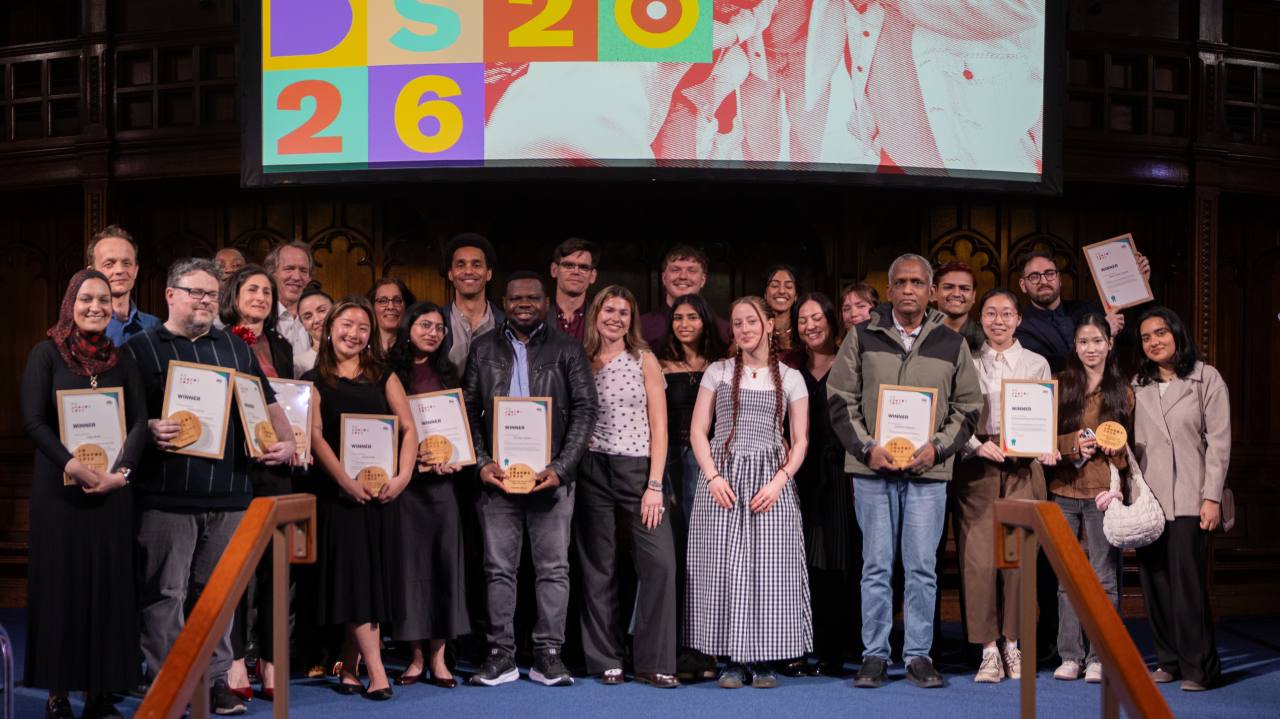
Hosts and winners of the University of Manchester Students’ Union (UMSU) Awards 2026 on stage in the Whitworth Building.

Teaching is Really Challenging Too

If learning is really challenging then it shouldn’t be a surprise to discover that teaching is really challenging too, for the exactly the same reasons. Like you, your teachers are only human (honest!) and we make mistakes – I’m sure you’ve noticed. We’ll be more likely to learn from our mistakes if we can get timely, constructive, actionable and personalised feedback from students. We ask ourselves the same three questions above to help us make progress, but like you, our time is finite as well so:

  1. Which knowledge and skills should we give the highest priority to in our teaching? Where do they fit inside, alongside and outside of curricula?
  2. What skills and knowledge are we teaching best and how will we know when our students are making sufficient progress?
  3. What skills and knowledge do we need to teach better and how are we going to assess them?

Right across the higher education sector, it’s a struggle to get feedback on teaching, positive or negative. Students are very busy, have higher priorities, suffer from endless survey fatigue and don’t always recognise the value of giving constructive feedback. Disengaged students don’t believe that their feedback will be listened to or acted on. All of this results in unit surveys that typically have response rates so embarrassingly low (less than 1%) that some UK Universities have abandoned using them completely. The tiny amount of data they provide is often meaningless, distorted and unreliable. Yet Universities continue to use them to assess the quality of their teaching and inform decisions about promotions.

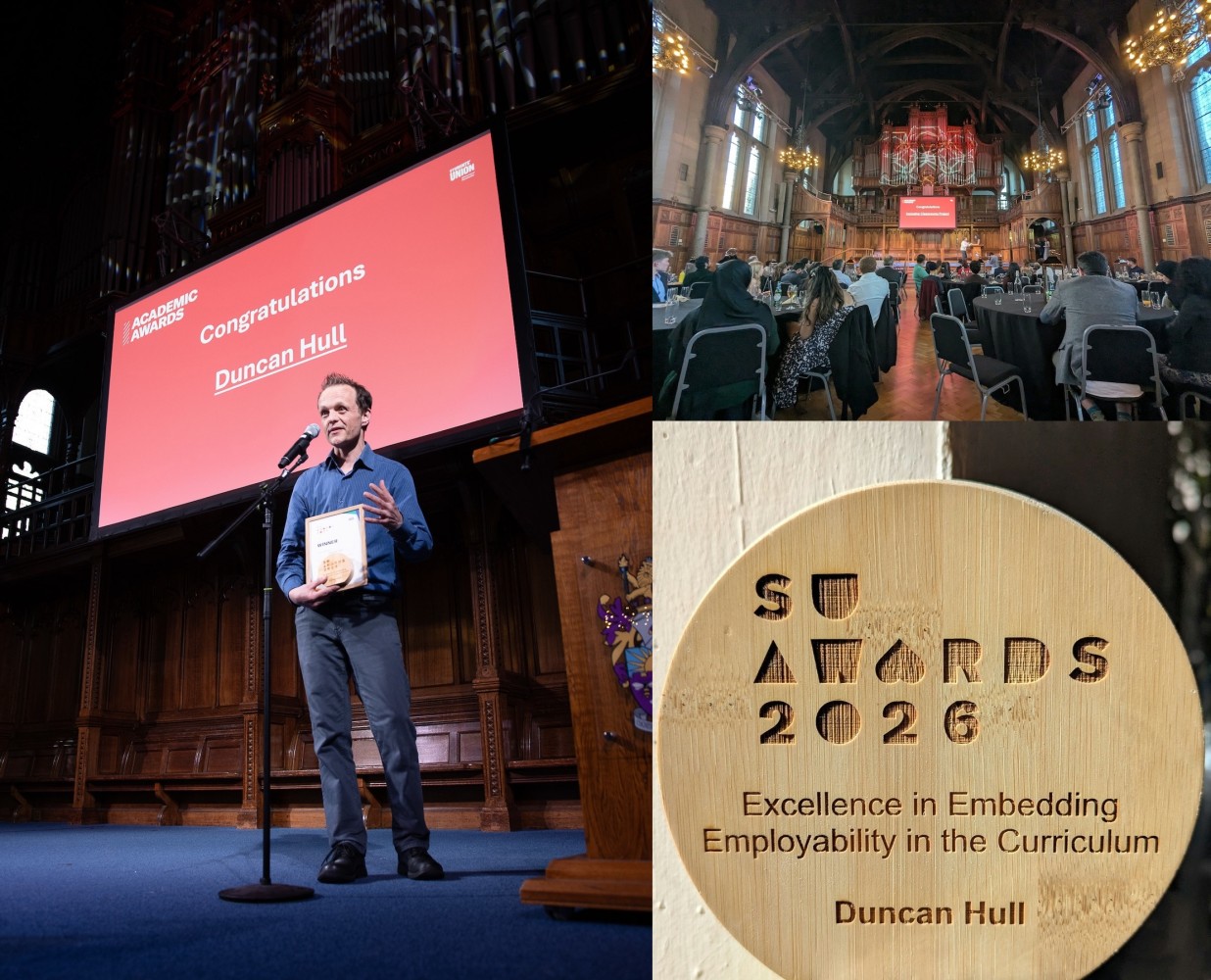
So it’s really reassuring to get positive feedback when we are teaching things well. Thanks to the anonymous students who nominated and voted for me for the Excellence in Embedding Employability in the Curriculum award. I almost blubbed uncontrollably on stage like Gwyneth Paltrow when this nomination text was read out by Freya Weetch: 😭

“Duncan Hull is an outstanding Employability Lead who goes above and beyond to prepare students for the world of work. From connecting students with industry to creating exciting opportunities and careers events, he inspires confidence and ambition at every step. His energy, dedication, and genuine passion for student success have made a huge impact, empowering students to step boldly into their future careers. ”

Those very kind and moving words from an anonymous student will help me stay motivated and remind me why I get out of bed in the morning. Thanks to Alexandra (Lexie) Baynes, Krystyna Drewenska, Freya Weetch, Alec Severs, Amrit Dhillon, Bo Ana Murphy, Ben Ward, Katie Jackson and everyone at the University of Manchester Students’ Union (UMSU) for hosting these events, past and present. It felt appropriate to receive this award in the magnificent Whitworth Building where thousands of former students like me have graduated accompanied by their friends, supporters and families. It was also an opportunity to speak in front of the senior leadership of the The University of Manchester including Duncan Ivison, Jenn Hallam, Peter Green, Colette Fagan – thanks to Andrew Mawdsley for recording my fifteen seconds of fame. 🙏

Congratulations and jubilations to my fellow nominees and laureates: Hanan El-Wandi, The Diversify Politics Society, Dr. Pietro Paolo Frigenti, SFHEA, CMktr, The University of Manchester Women In Business Society, The University of Manchester Neurology and Neurosurgery Society, Alejandra Vicente Colmenares, Transforming Assessment Together, Breaking the Barrier to Let a Voice Out, Lei Zeng, The Inclusive Classroom Project, Alan Davies, Harsath Udayakumar, Vuyo Dube, Maria-Michaela Vierita, Matt Dalgliesh, Yuxin Yan, Abdelrahman Shaaban, Ishnoor Kaur, Fiona Chan, Anahita Jayaram, Christian N. Nwosu, Brogan Pritchard, Md Faisal Mahmud, Adella Tobing, The North West Biotech Initiative, Laura Swain, Adam Danquah, The University of Manchester Faculty of Biology, Medicine and Health Maria Mercè Canal, Sohini Biswas, Carl M. Kulimushi, Anna Hood, PhD, Sam Rodgers, Louisa Shirley, Samhita Mukherjee, Lorraine Brobbey, Clara Dawson, Danny Dresner FCIIS, Doron Cohen, Neil Morrison, Saralees Nadarajah, Alison Hassett, Abdullatif Alfutimie, Venus Muscat, Stephen Craig, Sam Thozer, Mariangela D’Acri, Abbie Jones, Hala Shokr, Michele Caprio, Paul Tobin and Dr. Miri Firth PFHEA. Special thanks to Miri wooping loudly and gratifyingly when the winner was announced. 🏆

What was it Andy Warhol said? “In the future everyone will be famous for fifteen minutes seconds”. Enjoying my fifteen seconds of fame (top left) during evening in the Whitworth Building (top right) for an award (bottom right). Thanks again UMSU

Teaching is a team sport, not an individual one. Teaching professional skills by embedding employability in the curriculum is no different, we’ve had ongoing help from a large team of people from industry and academia. I’d like to thank the employers in our industry club, particularly Apple, Arm, Booking.com, BNY the BBC, Bloomberg, Couchbase, IBM, Apadmi, Matillion, Bet365, Amazon Web Services (AWS), Google, SeeChange Technologies, Morgan Stanley, Roku and many other members of our industry-club.cs.manchester.ac.uk who’ve helped us run a range of events for students in Computer Science. Many of these events have been organised in collaboration with our fantastic student societies UniCS Manchester, The Manchester Intelligence Society (MIS), The Manchester AI Society, RoboSoc (University of Manchester Robotics Society) and MathSoc Manchester who remind us what the joy of learning as part of a community is all about.

They’ve been a key part of what we’ve managed to offer students alongside Coding Your Future, the Wednesday Waggle with help from Imago Software (with Suzanne Embury), the Masood Entrepreneurship Centre (with Dan Syder) and UoM alumni. None of this would have been possible without ongoing support from my colleagues. Thanks to everyone who leads and delivers on the Herculean task our teaching and assessment Paul Nutter, Andrew Stewart, Steve Pettifer, Gareth Henshall, Stewart Blakeway, Louise Walker, David Petrescu, Sean Bechhofer, Uli Sattler, Andrea Schalk, Markel Vigo, Bijan Parsia, Toby Howard, Afrodite Galata, Tom Carroll, Chris Page and everyone else in the Department of Computer Science at The University of Manchester. 🐝

We’ve also been supported by Professional Services (PS) staff across the University, particularly Mabel Yau, Ruth Maddocks, Cameron Macdonald, Lisa Wright, Nanna Pedley, Caroline Whitehand, Penney Gordon-Lanes, Ben Carter, Amanda Conway, Helen Frost, Anna Lomas, Jenny Sloan, Kelly-Ann Mallon and everyone in the careers service.

Our teaching and research in Computer Science is part of something bigger, that students don’t really see directly: the School of Engineering (SoE) and The University of Manchester Faculty of Science and Engineering. Thanks to leadership and management from academics and administrators alike, including Sarah Cartmell, Sarah Sharples CBE FREng, Carly Peesapati, Akilu Yunusa-Kaltungo (PhD CEng FIMechE FHEA) and many more.

Last but not least, I’d like to thank the Teaching and Scholarship Network (TaSN) who help all staff across the University to improve the quality of teaching and learning, wherever they work and whatever they do. The TaSN is led by Hannah Cobb and Jenni Rose NTF PFHEA with help from Eleanor Aspey, Helen Baxter, Elaine Clark, Karen Lander, Jen McBride, Dr Rachel Parker-Strak, Thomas Rodgers, Reimala Sivalingam, Rachel Studd, Lisa Taylor, Holly Dewsnip and Nick Weise PFHEA IFNTF. If you care about improving teaching, you should come and join us in the TaSN. We host regular events online and in person which anyone from The University of Manchester (and beyond) is welcome to join. Our next TaSN meeting is Thursday 7th May, see the Teaching and Scholarship Network (TaSN).

You can find out more about the UMSU awards, which continue this week with the Arts and Media Awards on Thursday 7th May at manchesterstudentsunion.com/awards.

The UMSU awards continue on Thursday the 7th May 2026 ❤️

(You can cite this article using its full Digital Object Identifier DOI:10.59350/1y79e-6mn80 or the shorter doi.org/q6bx, both of which identify the same article. A modified version of this article is available at linkedin.com/pulse/why-learning-so-challenging-duncan-hull–i4qlc)

April 28, 2020

Join us to discuss learning programming languages: Monday 4th May at 11am #sigcsejclub

Filed under: education,engineering,Uncategorized — Duncan Hull @ 10:17 am
Tags: , , , ,

Hieroglyphs_from_the_tomb_of_Seti_I

Hieroglyphs from the tomb of Seti I, by Jon Bodsworth via Wikimedia Commons and the Egypt archive

ACM SIGCSE Journal Club returns Monday 4th May at 11am. The paper we’re discussing this month is “Relating Natural Language Aptitude to Individual Differences in Learning Programming Languages” by Chantel Prat et al published in Scientific Reports. [1] Here’s the abstract:

This experiment employed an individual differences approach to test the hypothesis that learning modern programming languages resembles second “natural” language learning in adulthood. Behavioral and neural (resting-state EEG) indices of language aptitude were used along with numeracy and fluid cognitive measures (e.g., fluid reasoning, working memory, inhibitory control) as predictors. Rate of learning, programming accuracy, and post-test declarative knowledge were used as outcome measures in 36 individuals who participated in ten 45-minute Python training sessions. The resulting models explained 50–72% of the variance in learning outcomes, with language aptitude measures explaining significant variance in each outcome even when the other factors competed for variance. Across outcome variables, fluid reasoning and working-memory capacity explained 34% of the variance, followed by language aptitude (17%), resting-state EEG power in beta and low-gamma bands (10%), and numeracy (2%). These results provide a novel framework for understanding programming aptitude, suggesting that the importance of numeracy may be overestimated in modern programming education environments.

The paper describes an experiment which investigates the relationship between learning natural languages and programming languages and draws some interesting conclusions that provide some good discussion points. Does being good at learning natural languages like English make you good at learning programming language like Python? Do linguists make good coders? We’ll be meeting on Zoom, details will be sent to anyone who registers at sigman2.eventbrite.co.uk

References

  1. Prat, C.S., Madhyastha, T.M., Mottarella, M.J. et al. (2020) Relating Natural Language Aptitude to Individual Differences in Learning Programming Languages. Scientific Reports 10, 3817 (2020). DOI:10.1038/s41598-020-60661-8


December 10, 2019

Thank you Sara and Bhav at Wikimedia UK

320px-TtT_Group_Shot_2

Participants in the Training of Trainers workshop at the University of Glasgow, November 2019. Picture by Sara Thomas (WMUK) [CC BY-SA 4.0 commons.wikimedia.org/wiki/File:TtT_Group_Shot_2.jpg

Last month I attended a three day Training of Trainers (ToT) course at the University of Glasgow. Run as an interactive workshop, the course was designed to help leaders of Wikipedia training events to improve their delivery and organisation. Having participated and run several Wikipedia events in the past, such an Ada Lovelace event earlier this year, I was keen to learn how do things better. Here’s a report on the workshop, with some bonus extra curricular Glasgow goodies thrown in for good measure. Thanks again Sara Thomas and Bhavesh Patel for organising and delivering the course.

As a charity, Wikimedia UK (WMUK) is part of the global Wikimedia movement. WMUK organises events in order to:

… work in partnership with organisations from the cultural and education sectors and beyond in order to unlock content, remove barriers to knowledge, develop new ways of engaging with the public and enable learners to benefit fully from the educational potential of the Wikimedia projects.

Most of the workshop participants (pictured top right) were from Gallery, Library, Archive and Museum (GLAM)  institutions and a few educational and charitable ones too. Over the three days, here is what we covered:

Day one: Getting started

We kicked off with some introductory activities including “head, heart & hands” from Waldorf education. We looked at needs analysis (Who are the participants? What is the purpose?), adult learning (particularly Howard Gardners theory of multiple intelligences) and design skills (using David Kolb’s experiential learning and Bernice McCarthy’s 4MAT).

Day two: From theory to practice

The second day revisited design skills while touching on delivery skills and group work. This covered elocution, voice projection, body language and an examination the range of experiential activities that can be utilised in workshops. We also discussed aspects of Dave Meier’s accelerated learning (with feedback) and finished the day up with teams preparing for activities for day three.

Day three: The Show Must Go On

The final day of the course finished with the participants divided into four small teams. Each presented a on hour mini-session and had it critiqued by peers. This enabled us to learn from;

  • Our own mistakes
  • Other peoples mistakes
  • Copying / stealing other peoples good ideas, of which there were plenty. Thanks Abd, Daria, Doug, Eoin, Ian, Tara, Ian, Madeleine, Marianne, Saeeda, Tore, Sara and Bhav!

Overall, this was a really useful and memorable training course, one of the best training courses I’ve been on. The content, participants, location were all great and I felt empowered by taking the course as well as making useful contacts from a range of different organisations. It had a clearly defined purpose, well chosen activities and participants, with nothing irrelevant presented. There were tonnes of practical ideas to put into practice straight away which I look forward to doing in 2020. If you’d like to do the course, get in touch with Wikimedia UK.

While in Glasgow, it would be rude not to take advantage of all the bonus extra curricular activities the city has to offer:

Bonus 1: People Make Glasgow Hospitable 🏴󠁧󠁢󠁳󠁣󠁴󠁿

They say that People Make Glasgow, and Glaswegians are very hospitable. In between training sessions our host Sara showed us around the city, including the University cloisters (etc), Inn Deep on the banks of the River Kelvin and Curlers Rest in the West End. Sara’s impressive knowledge of Glasgow and its history is wikipedian in its depth and breadth.

Bonus 2: Glaswegian-Mancunian connections 🇬🇧

To me, Glasgow and Manchester feel like sibling cities separated at birth. If you’re English, Glasgow can feel like a Scottish Manchester. Perhaps Manchester feels like an English Glasgow to the Scots? Here is the case:

  • Second city syndrome 🥈: As second cities, both Glasgow and Manchester live in the shadow of their more famous capitals, Edinburgh and London. Both cities are the “belly and guts” of their respective nations. Glasgow had its docks, Manchester had its cotton. While both trades are long gone, they leave similar post-industrial legacies on the culture and infrastructure of their respective cities.
  • Shipping 🚢: Ships, shipping, docks, ports, quays and wharfs run deep in both cities. Glasgow built ships on the River Clyde while Manchester used ships for export and import of goods on its Ship Canal.
  • Football ⚽: Love it or loathe it, the fitbaw connection between Glasgow and Manchester is strong [1,2]. Scrolling through the list of Manchester United managers I count not just one, two or even three but FOUR Glaswegians. Matt Busby (Belshill is basically Glasgow), Tommy Docherty, Alex Ferguson and David Moyes. Is this a coincidence or catholicism? [1,2] Who knows, but my hypothesis is that being shouted at in a strong Glaswegian accent can make teams perform better (although it didn’t work very well for Moyes). I wonder how many Glasgow kisses Alex Ferguson gave his overpaid prima donna squad to keep them in line? Strangely, the fitbaw manager connection isn’t reciprocated: I can’t find any Mancunians in the list of Celtic managers or the list of Rangers managers

Bonus 3: King Tut’s Wah Wah Hut 🎸

Glasgow is home to the legendary King Tut’s Wah Wah Hut. This humble venue, relatively small with a capacity of only 300, has hosted an impressive range artists including Coldplay, Radiohead, Oasis, Blur, Pulp, Manic Street Preachers, you name it, they’ve played King Tut’s. Curious to find out what all the fuss was about, I arranged to meetup with an old Glaswegian friend for a drink at the venue. Assuming the gig that night would be sold out we asked at the bar who was playing. Turns out they had a handful of tickets left, so we spontaneously bought a pair to see Blanco White. Mixing Andalusian and Latin American influences, Blanco White play melancholic but beautiful tunes using a variety of instruments including the Charango [3]. Part of the reason King Tut’s is legendary is Glaswegian audiences are lively, and it was fun to see the band visibly moved by what Josh Edwards, the lead singer told us was:  “easily the best reception we’ve had in months of touring”.

Bonus 4: Like a Brudge over troubled water 🌊

Looking for a walk, run or ride in Glasgow? There are some great routes around the city like the Glasgow River Clyde Bridges, with at least 21 bridges to cross the Clyde on. On an early morning run, I couldn’t find any of the “bridges”, but there were plenty of “brudges” and some fantastic scenery along the Clyde. Och aye!

Bonus 5: The Glasgow Bucket List ☑️

There is still loads on my personal Glasgow bucket list for future visits, like the Kelvingrove Art Gallery and Museum, St. Mungo’s Cathedral, the Riverside Museum, Glasgow City Chambers, People’s Palace and the Glasgow Science Centre. What a great place Glasgow is, if you’ve never been, what are you waiting for?

References

    1. Frank Worrall (2007) Celtic United: Glasgow and Manchester – Two Football Clubs, One Passion, Mainstream publishing ISBN: 9781845962760
    2. Kieran Cunningham (2016) Alex Ferguson: The Irish Connection The Irish Daily Star, buzz.ie ☘️
    3. Blanco White: Olalla, more than a name…

July 17, 2019

Educating Computer Scientists: What should we discuss at #SIGCSE journal club?


fightclub
The first rule of journal club is, you do not talk about journal club. The second rule of journal club is, YOU DO NOT TALK ABOUT JOURNAL CLUB.* Discussions will go on as long as they have to. If this is your first time at journal club, you have to debate. Dress code: silly frocks and ridiculous hats are optional. Picture of my colleagues in the School of Computer Science ready for a graduation ceremony 2013, by Toby Howard.

So we’re starting a new Journal Club and Special Interest Group (SIG) for lecturers, teachers and course leaders in Manchester to discuss Computer Science Education (CSE). We’ll pick interesting papers, read them and then meet regularly to discuss them. It’s a bit like Fight Club but instead of beating each other up, we’ll “beat up” (review & critique) papers. Hopefully we’ll all learn something along the way. The first question to answer is, which papers should we discuss?

Computer Science (CS) is a young and professionally immature subject, it has only been taught at undergraduate level since 1965 in the UK. Across the pond in America, the Association for Computing Machinery (ACM) Special Interest Group on Computer Science Education (sigcse.org) only started as recently as 1968, making it a very spritely fifty years young. On educational timescales, computer science is a whipper snapper! Fifty years is peanuts when you compare it to the millennia that mathematics has been taught for. In ancient Greece the earliest lessons were mathematics hence μάθημα (mathematics) means the lesson and derivatives like μαθαίνω (matheno) mean to learn or to know. While the greeks built some impressive analogue computers, digital computers and computer science as we now know it, did not exist in Ancient Greece. 🇬🇷 

What this means is that there is plenty of evidence about what works (and what doesn’t) when teaching mathematics. In contrast, how to teach Computer Science, what should be taught and why, to whom and when are all open questions

So, to get the ball rolling here are nine papers that tackle some of these open questions in Computer Science Education. We’ll vote on the three most interesting papers and read them before meeting to review them. Many of these papers are likely to be of interest to “educators” in its broadest sense. That means anyone teaching coding, computer science, tinkering, hacking and software/hardware engineering at any level. Which includes primary schools, code clubs, bootcamps, CoderDojos, hackathons, secondary schools, CPD programmes, K-12 education, lifelong learning, staff training courses, onboarding, induction, adult education programmes, return to work schemes and so on. If you’d like to join us we’ll be meeting in the Kilburn building, Manchester, M13 9PL (mosty likely first week of September, date and time tbc, drop me a line). Otherwise enjoy reading the insights below (DOI’s link to originals which may be behind a paywall, freely accessible versions are provided where available). Some papers are quite short, and have been selected for the topic they discuss rather than the quality of the content.

Twenty dirty tricks to train software engineers by Ray Dawson

A classic paper from Ray Dawson in the department of Computer Science at Loughborough University describing dirty tricks they use to introducing the frustrating realities of a software engineering development to students.

“Many employers find that graduates and sandwich students come to them poorly prepared for the every day problems encountered at the workplace. Although many university students undertake team projects at their institutions, an education environment has limitations that prevent the participants experiencing the full range of problems encountered in the real world. To overcome this, action was taken on courses at the Plessey Telecommunications company and Loughborough University to disrupt the students’ software development progress. These actions appear mean and vindictive, and are labeled ‘dirty tricks’ in this paper, but their value has been appreciated by both the students and their employers. The experiences and learning provided by twenty ‘dirty tricks’ are described and their contribution towards teaching essential workplace skills is identified. The feedback from both students and employers has been mostly informal but the universally favourable comments received give strong indications that the courses achieved their aim of preparing the students for the workplace. The paper identifies some limitations on the number and types of ‘dirty tricks’ that can be employed at a university and concludes that companies would benefit if such dirty tricks were employed in company graduate induction programmes as well as in university courses.”

Identifying student misconceptions of programming by Lisa Kaczmarczyk et al

This paper by Lisa Kaczmarczyk et al (formerly University of California, San Diego) recently came top of the ACM SIGCSE Top Ten Symposium Papers of All Time. In Lisa’s own words from the reinventing nerds podcast “The paper is sharing the results of a research study about misconceptions that novice computer science students have. Computer science is also a very abstract topic and the mistakes that students make are often baffling. The paper reports on the misconceptions that students have and why they have them. It’s important because this paper was the first to apply rigorous research methods to investigating misconceptions.” From the abstract:

“Computing educators are often baffled by the misconceptions that their CS1 students hold. We need to understand these misconceptions more clearly in order to help students form correct conceptions. This paper describes one stage in the development of a concept inventory for Computing Fundamentals: investigation of student misconceptions in a series of core CS1 topics previously identified as both important and difficult. Formal interviews with students revealed four distinct themes, each containing many interesting misconceptions. Three of those misconceptions are detailed in this paper: two misconceptions about memory models, and data assignment when primitives are declared. Individual misconceptions are related, but vary widely, thus providing excellent material to use in the development of the CI. In addition, CS1 instructors are provided immediate usable material for helping their students understand some difficult introductory concepts.”

Stride in BlueJ – Computing for All in an Educational IDE by Michael Kölling et al

This paper by Michael Kölling et al describes an Integrated Development Environment (IDE) that combines the best features of visual programming languages (blockly, scratch etc) with text-based programming (such as Python, Java, C etc) for use in BlueJ.org.

“In introductory programming teaching, block-based editors have become very popular because they offer a number of strong advantages for beginning programmers: They avoid many syntax errors, can display all available instructions for visual selection and encourage experimentation with little requirement for recall. Among proficient programmers, however, text-based systems are strongly
preferred due to several usability and productivity advantages for expert users. In this paper, we provide a comprehensive introduction to a novel editing paradigm, frame-based editing – including design, implementation, experimentation and analysis. We describe how the design of this paradigm combines many advantages of block-based and text-based systems, then we present and discuss an implementation of such a system for a new Java-like language called Stride, including the results of several evaluation studies. The resulting editing system has clear advantages for both novices and expert programmers: It improves program representation and error avoidance for beginners and can speed up program manipulation for experts. Stride can also serve as an ideal stepping stone from
block-based to text-based languages in an educational context.”

  • Kölling, Michael; Brown, Neil C. C.; Hamza, Hamza; McCall, Davin (2019). “Stride in BlueJ — Computing for All in an Educational IDE”: Proceeding SIGCSE ’19 Proceedings of the 50th ACM Technical Symposium on Computer Science Education 63–69. DOI:10.1145/3287324.3287462

Ten quick tips for teaching programming by Neil Brown and Greg Wilson

This short paper from Neil Brown at King’s College London and Greg Wilson of software carpentry fame, is part of the popular Public Library of Science (PLOS) Ten Simple Rules series. The tips capture some ongoing research in listicle format.

“Research from educational psychology suggests that teaching and learning are subject-specific activities: learning programming has a different set of challenges and techniques than learning physics or learning to read and write. Computing is a younger discipline than mathematics, physics, or biology, and while there have been correspondingly fewer studies of how best to teach it, there is a growing body of evidence about what works and what doesn’t. This paper presents 10 quick tips that should be the foundation of any teaching of programming, whether formal or informal.

These tips will be useful to anyone teaching programming at any level and to any audience.”

How to Involve Students in FOSS Projects by Heidi Ellis et al

Initiatives like Google Summer of Code (GSoC) and Git going in FOSS aim to get students involved in Free and Open Source Software (FOSS) projects, through paid work and online tutorials. Some courses use FOSS projects to teach software engineering, though these are fairly unusual. How can we get more students (and teachers) involved in FOSS projects? This paper by Heidi J. C. Ellis provides some guidance

“Software projects are frequently used to provide software engineering students with an understanding of the complexities of real-world software development. Free and Open Source Software (FOSS) projects provide a unique opportunity for student learning as projects are open and accessible and students are able to interact with an established professional community. However, many faculty members have little or no experience participating in an open source software project. In addition, faculty members may be reluctant to approach student learning within such a project due to concerns over time requirements, learning curve, the unpredictability of working with a “live” community, and more. This paper provides guidance to instructors desiring to involve students in open source projects.”

  • Ellis, Heidi J. C.; Hislop, Gregory W.; Chua, Mel; Dziallas, Sebastian (2011). “How to involve students in FOSS projects” Frontiers in Education Conference (FIE) DOI:10.1109/FIE.2011.6142994 (ironically, if there is an open access version of this paper, I can’t find it! Another nominee for the Open Access Irony Awards)

A methodology for using GitLab for software engineering learning analytics by Julio César Cortés Ríos et al

This paper by Julio César Cortés Ríos at the University of Manchester describes using GitLab to analyse and improve courses.

“To bridge the digital skills gap, we need to train more people in Software Engineering techniques. This paper reports on a project exploring the way students solve tasks using collaborative development platforms and version control systems, such as GitLab, to find patterns and evaluation metrics that can be used to improve the course content and reflect on the most common issues the students are facing. In this paper, we explore Learning Analytics approaches that can be used with GitLab and similar tools, and discuss the challenges raised when applying those approaches in Software Engineering Education, with the objective of building a pipeline that supports the full Learning Analytics cycle, from data extraction to data analysis. We focus in particular on the data anonymisation step of the proposed pipeline to explore the available alternatives to satisfy the data protection requirements when handling personal information in academic environments for research purposes.”

Scaling Introductory Courses Using Undergraduate Teaching Assistants

Teaching computer science to large classes requires typically requires armies of teaching assistants, demonstrators. Your TA’s need to know their stuff and should be able to deal with students in a fair and consistent way. This paper is a medley of opinions from Jeffrey Forbes at Duke University, David Malan from Harvard University, Heather Pon-Barry from Mt. Holyoke College, Stuart Reges from the University of Washington and Mehran Sahami from Stanford University.

“Undergraduates are widely used in support of Computer Science (CS) departments’ teaching missions as teaching assistants, peer mentors, section leaders, course assistants, and tutors. Those undergraduates engaged in teaching have the opportunity to deeply engage with CS concepts and develop key communication and social competencies. As enrollments surge, undergraduate teaching assistants (UTAs) play a larger role in student experience and outcomes. While faculty and graduate student instructional support does not necessarily increase with the number of students in our courses, the number of qualified undergraduate teaching assistants for introductory CS courses should scale with the number of students in our courses. With large courses, the significance of the UTAs’ role in students’ learning likely also increases. Students have relatively little interaction with the instructor, and faculty may have more challenges monitoring and supporting individual UTAs. UTAs have a major role in affecting climate in computer science courses. The climate in large courses has substantial implications for students from groups traditionally underrepresented in computing. This panel will discuss how undergraduate teaching assistants can serve as a scalable effective teaching resource that benefits both the students in the course and the UTAs themselves.”

What Are We Doing When We Teach Computing & Programming by Sally Fincher

Two related papers by Sally Fincher at the University of Kent, the first published in 1999…

“The academic discipline of computer science uniquely prepares students for future study by teaching the fundamental construct of its practice-programming- before anything else. The disciplinary argument seems to run that if a student is not versed in the practicalities, then they cannot appreciate the underlying concepts of the discipline. This may be true. However an analogous simulation would be if it were thought necessary for architecture students to be taught bricklaying before they could appreciate the fundamentals of building design. This argument is clearly flawed when compared to endeavours such as the study of English Literature, which makes no claim to teach the practice of producing work before the study of the products of others work. It is possible that this is an argument of disciplinary maturity-that all disciplines have passed through a similar phase. This paper examines the emergent approaches being defined, all of which address the central concern of the teaching of programming and its relationship to the learning of computer science. It examines: the “syntax-free” approach of Richard Bornat and Russel Shackelford, the “problem-solving” approach of David Barnes (et al.), the “literacy” approach of Peter Juliff and Owen Astrachan and the “computation-as-interaction” approach of Lynn Andrea Stein. These approaches are discussed both in their own terms, and also placed in a preliminary taxonomic framework for the teaching of programming.”

….and the second published in 2015 (see comments on Mark Guzdial’s summary):

“Research on the cognitive, educational, and policy dimensions of teaching computing is critical to achieving “computer literacy.”

Making CS Learning Visible: Case Studies on How Visibility of Student Work Supports a Community of Learners in CS Classrooms by Amber Solomon et al

This is a paper by Amber Solomon et al from the Innovation and Technology in Computer Science Education (ITiCSE) conference is about reducing defensive and competitive (macho?) cultures in Computer Science  (via Mark Guzdials blog).

Modern learning theories emphasize the critical social aspect of learning. Computer science (CS) classrooms often have “defensive climates” that inhibit social learning and prevent the development of a community of learners. We believe that we can improve the social context of computer science learning by expanding CS learning beyond the single student in front of a display screen. Our theory is that the single student and single display inhibits collaboration and collaborative awareness of student work. In this paper, we present two case studies where we explored ways to make student work visible to peers. The first case study involved using a studio model for learning enabled by projection-based Augmented Reality (AR), and the second case study involves using a maker-oriented curriculum to make student work visible. Findings suggest the visibility of student work in CS classrooms helped support a community of learners: students collaborated, used each other as sources of inspiration, and felt more comfortable asking for help.

References and notes

*”You do not talk about Journal Club” is an adapted quote from the 1999 film Fight Club, see below. I’m only joking, you are of course welcome to talk to anyone who will listen about Journal Club.

Talking of David Malan, you can see his talk on making CS50 scale when he visited Manchester in 2017

June 23, 2017

Nine ideas for teaching Computing at School from the 2017 CAS conference

CAS

Delegates at the Computing at School conference 2017 #CASConf17 answering diagnostic questions, picture by Miles Berry.

The Computing At School (CAS) conference is an annual event for educators, mostly primary and secondary school teachers from the public and private sector in the UK. Now in its ninth year, it attracts over 300 delegates from across the UK and beyond to the University of Birmingham, see the brochure for details. One of the purposes of the conference is to give teachers new ideas to use in their classrooms to teach Computer Science and Computational Thinking. I went along for my first time (*blushes*) seeking ideas to use in an after school Code Club (ages 7-10) I’ve been running for a few years and also for approaches that undergraduate students in Computer Science (age 20+) at the University of Manchester could use in their final year Computer Science Education projects. So here are nine ideas (in random brain dump order) I’ll be putting to immediate use in clubs, classrooms, labs and lecture theatres:

  1. Linda Liukas demonstrated some intriguing ideas from her children’s books and HelloRuby.com that are based on Montessori education. I shall be trying some of these out (particularly the storytelling stuff) at code club to keep girls involved
  2. Sue Sentance and Neil Brown from King’s College London gave an overview of some current research in pedagogy.  They discussed research questions that can be tackled in the classroom like (for example) do learners make more progress using visual programming languages (like Scratch and Blockly) or traditional text-based languages (like Python and Java etc)? Many of these research questions would make good projects for undergraduate students to investigate in secondary schools, see research on frame based editors, for example.
  3. Michel Wermelinger from the Open University demonstrated using iPython notebooks for teaching data literacy at the Urban Data School. Although I’m familiar with iPython, it had never occurred to me to actually use iPython in school for teaching. It is a no-brainer, when you think about it, even for primary, because you have your code, inputs and outputs all in one window, and can step through code execution instead of (or as well as) using more conventional tools like Trinket, Thonny or IDLE. Data literacy is fun to teach.
  4. Miles Berry from the University of Roehampton demonstrated Diagnostic Questions in Project Quantum. These are a collection of high quality quizzes to use interactively for example as hinge questions, where teaching is adapted depending on answers given, like this multiple choice question:
    Consider the following Python code:
    
    a = 20
    b = 10
    a = b
    
    What are the values of a and b?
    
    A: a = 10, b = 10
    B: a = 20, b = 20
    C: a = 30, b = 10
    D: a = 10, b = 20
    

    You’ll have to try these five questions to check your answer. The useful thing here is that DiagnosticQuestions.com (the platform on which this is built) allows you to see lots of responses, for example each answer (A, B, C or D) above was selected by 25% of participants. You can also view explanations which illuminate common misconceptions (e.g. the classic mistake of confusing assignment with equality) as well as providing a bank of free questions for use in the classroom.

  5. Mark Guzdial from GeorgiaTech discussed using learning sciences to improve computing teaching. He demonstrated predictive questions (e.g. ask students What do you think will happen when we run this code? before actually executing it) alongside what he called subgoal labelling. These are simple ideas (with proven benefits) that can be put to use immediately. I’ll also be trying the Live Coding (with Sonic Pi) and Media Computation he demonstrated asap.
  6. Laurence Rogers demonstrated Insight: Mr. Bit  this looks like a good app for using BBC microbits in the classroom, connected to a range of sensors, provided you’ve got access to iPads.
  7. A copy of Hello World magazine was in the conference bag. The summer 2017 issue has an unusual article from Ian Benson from Kingston University and Jenny Cane describing their use of the Haskell programming language to teach 5-7 year olds to reason symbolically and learn algebra before arithmetic with help from Cuisenaire rods. The Scratch Maths project at University College London are doing similar things, building mathematical knowledge using Scratch, rather than Haskell. These are experimental ideas you could try out on unsuspecting (junior) family members.
  8. Lee Goss from Barefoot Computing, described the free CPD for primary school teachers on offer from BT. I’ve signed up and hope to plug some of the shortcomings in the Code Club Curriculum.
  9. Richard Jarvis demonstrated appJar, a handy Python library for teaching Graphical User Interfaces (GUIs). That’s Jar as in Jarvis and Jam, not JAR as in Java ARchive BTW. I’ve not tried GUIs at code club yet, but appJar looks like a good way to do it.

There were lots more people and projects at the conference not mentioned here including tonnes of workshops. If you’re interested in any of the above, the CAS conference will be back in 2018. Despite the challenging problems faced by Computer Science at GCSE level, it was reassuring and inspiring to meet some members of the vibrant, diverse and friendly community pushing the boundaries of computing in schools across the United Kingdom. Thanks again to everyone at CAS for putting on another great event, I will definitely consider attending next year and maybe you should too.

January 20, 2015

What is effective teaching? The willing definition via Grant Campbell

teaching large classes

Teaching Large Classes: Discussion. Creative Commons BY-NC-SA image via Giulia Forsythe on Flickr @giuliaforsythe

(This post is part of a series about the New Academics Program (NAP), I’ll be using this blog to scribble notes about the NAP as I work my way through it.)

Ask ten different people what effective teaching is and you’ll get ten different answers. Here’s a handy definition (let’s call it the willing definition for now) from Grant Campbell, currently Professor of Chemical Engineering at the University of Huddersfield. The original source may possibly be from elsewhere. [1]

 “Effective teaching is inclining people to learn willingly what they would otherwise be disinclined to learn.”

So according to this definition, good teachers make you learn things you wouldn’t normally be interested in, or as campbell puts it Teaching easy interesting stuff is easy. Teaching difficult dull stuff is more of a challenge.

Is this definition useful?

This is an unusual definition, but is teaching easy interesting stuff always easy to do? Probably not. It’s also not always obvious to teachers (or students) how hard or easy things are going to be to learn. Appearances can be deceptive.

Imagine trying to teach somebody something they didn’t want to know or poorly understood. Like the Physicist Akram Khan @ProfAkramKhan, who has been trying to teach the novelist Will Self about Particle Physics, that’s hard (especially with a deliberately difficult student like Self) but the results are entertaining. Most students in higher education are considerably more willing than Self, and more motivated to work their way through the inevitable dull hard stuff that comes with every subject, so IMHO, effective teaching is about both the dull and the exciting.

References

  1. Diane Salter (2013) Cases on Quality Teaching Practices in Higher Education ISBN-13: 978-1466636613

January 11, 2013

A joke about teaching and learning via Jason Bangbala

The MOOC

What, if anything, can stop the MOOC? Creative Commons licensed picture via Giulia Forsythe on Flickr.

The debate about Massive Open Online Courses (MOOCs) is making lots of people think harder about education and how people learn. Are we witnessing Higher Education’s Napster moment, where online services replace physical ones [1] ? Is undergraduate education over-priced [2]? How can education be improved [3]? What is the point of Education anyway? These are all interesting and mostly unanswered questions.

You might hear it said that secondary education is often delivered by excellent teachers, with questionable subject knowledge, whereas higher education is delivered by experts with excellent subject knowledge, but poorer teaching skills.

Jason Bangbala, an educational consultant, puts it another way.

What is the difference between primary, secondary and higher education?

  • In primary education, the teachers love their students.
  • In secondary education, the teachers love their subject.
  • In higher education, the teachers love themselves.

True? Hmmm, I don’t know. But it is funny…

References

  1. Moshe Vardi (2012). Will MOOCs destroy academia? Communications of the ACM, 55 (11), 5-5 DOI: 10.1145/2366316.2366317
  2. Salman Khan (2013). What college could be like Communications of the ACM, 56 (1) DOI: 10.1145/2398356.2398370
  3. Fred Martin (2012). Will massive open online courses change how we teach? Communications of the ACM, 55 (8) DOI: 10.1145/2240236.2240246

Blog at WordPress.com.