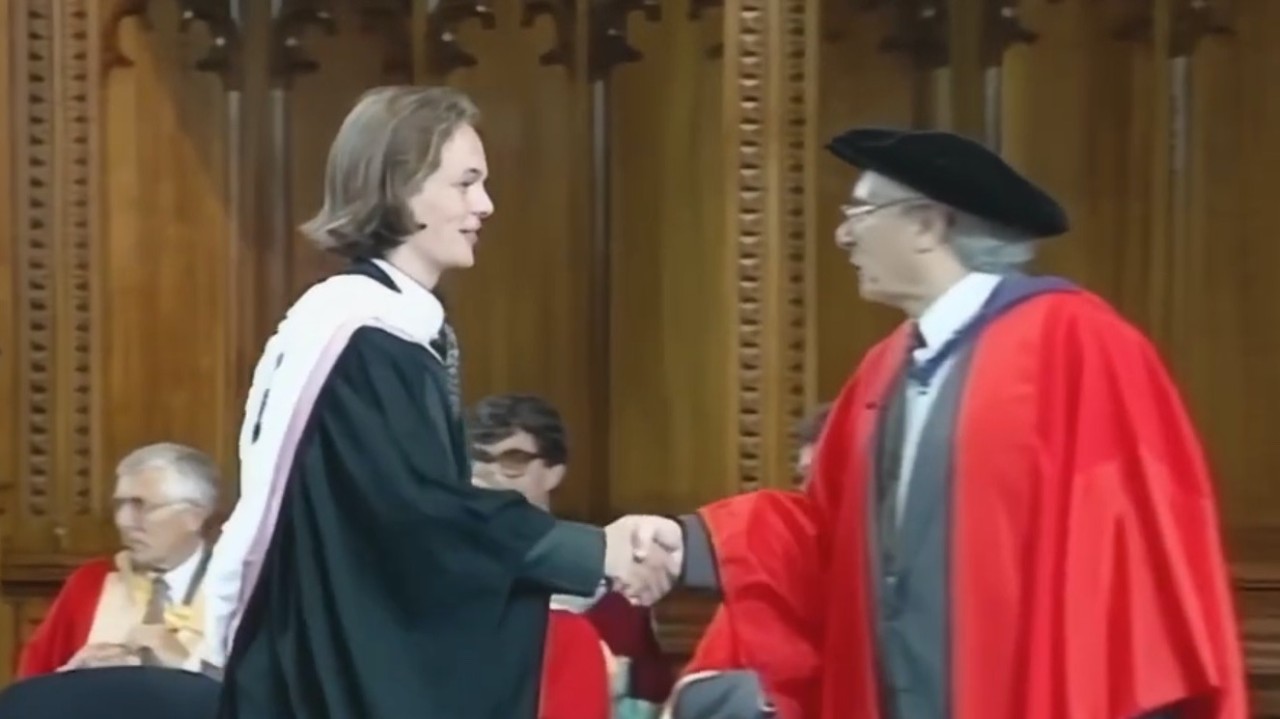
Today is the 4th July, a day for celebrating independence. Alongside those who graduated with me in the Whitworth Building, I’m celebrating independence. Not national independence marked by independence days around the world, but independence of thinking and independence of learning. These are two of the most important things and education can give you. I’m grateful to have received these gifts from my teachers and fellow students.
Studying any subject for an extended period of time can give you two things that help you become more independent.
- Better critical thinking skills, since it’s the 4th July, let’s call “critical thinking” free and independent thinking skills. Raise a glass to freedom, something they can never take away.
- Bigger and more diverse social networks of friends, professionals, mentors, peers, role-models, task masters, teachers, influencers, experts, leaders, colleagues and collaborators that you meet in the communities you are part of. The teams you join at University are likely to be bigger and more diverse than those you were previously a member of.
If you’re graduating this year, you might be wondering what all those years of study were all about, particularly now that you’ve finally got some time to properly digest and reflect on your experience.
What was that all about? Are you stuffed? Was it worth it?
Studying anything is a like having a large meal. When you finish, you feel so full that couldn’t eat another thing, not even a wafer thin mint. Instead of having a bellyful of food, your head is crammed full of ideas that you learned in labs, lectures and across campus, from the whole community around you. Some of these ideas are quickly digested, others take longer. They all become a part of you.
Nourishing mother is a phrase used to describe what every University does, usually expressed in latin: alma mater. Our metaphorical mothers should be plural and neutral, not singular and gendered because we are nourished by many mothers, fathers, brothers, sisters, siblings, cousins, uncles, aunts, grandparents and so on. There’s a whole intellectual family around us in education, so alma familia: nourishing family, would be a more accurate description of what Universities, colleges and schools are actually doing.
If you’re graduating now, you might not feel like eating any more, but you can always come back later in the restaurant of lifelong learning when your hunger returns. There’s always something new on the menu, some “dish” you haven’t tried yet. The door is always open to learning and it doesn’t have to be in academia, you’ll learn just as much in the workplace.
Thanks, plant scientists for your nature and nurture
My undergraduate degree is a BSc (Hons) Applied Plant Sciences, when you tell people that, the usual reaction is WTF? [1] The Applied bit is what the University now calls Industrial or Professional Experience (IE), as part its drive towards more Partner-Enabled Learning in the Manchester 2035 strategy. The discipline of Plant Sciences used to be called Botany, but since that usually invokes images of skipping through meadows, pressing flowers and speaking Latin binomials, it’s usually known as Plant Sciences because that sounds more modern. We did skip through meadows and press flowers, which I can thoroughly recommend, but it was only 10 credits out of 360 total. The rest of the degree studied the growth, reproduction and evolution of plant life at every level from the molecular, biochemical, genetic and cellular through to physiological and ecological over the last 3.5 billion years of life on earth.
Another way of describing what a degree means is to thank all the people who taught it. So, thanks to Tony Trinci (microbiology), Bob Callow (Genetics), Jackie Potter (final year project supervisor), Liz Sheffield (botany), Joan Watson (palaeobotany) [2], Keith Gull (molecular biology), Amanda Bamford (physiology), Laurence Cook (genetics), Robin Baker (evolutionary biology), Sean Edwards (systematics & taxonomy), John Lee (ecology), John Tallis (ecology), Michael Emes (biochemistry), Caroline Bowsher (biochemistry), Cliff Bray (biochemistry), Allan G. Lowe (biochemistry), Roland Ennos (biomechanics), Phil Harris (placement year), Malcolm Press CBE (ecology), David Sigee (botany), Harry Epton, Dick Benton, Robert W. Foster (computational biology), Fred Rumsey. Thanks to all the teachers whose names I can’t remember. This is slightly embarrassing but it was a while ago! The unknown lecturer from the Department of Mathematics taught us differential calculus and statistics. Some more cell biologists & geneticists from first year are a hazy memory, an economist from Humanities at The University of Manchester taught us some environmental and agricultural economics. An army of graduate teaching assistants (GTAs) and technicians made the labs work. There were lots of wet labs in vivo and in vitro, with a few computer labs in silico and some field trips too. Then there’s all those administrators in the back office who kept the wheels turning. Different people are affected by different teachers in different ways. For me, out of all the teachers above, those that had the biggest influence on me were:
- Tony Trinci (1936-2020) Pro-Vice-Chancellor (PVC) at The University of Manchester, pictured above. Leaders are often sharp people and some leading Professors have sharp elbows and sharp tongues to accompany their sharp minds. Not Tony. He was approachable and treated students with kindness, patience and respect, while also being a razor-sharp leader in his field of mycology. Thanks Tony and RIP.
- Liz Sheffield: Associate PVC and Emeritus Professor and Dean at the University of Liverpool. Liz successfully drilled into many undergraduates like me the importance of written English, not just as a tool for communication but as a tool for thinking. Some of this was done using the Biological Sciences Review a magazine distributed to thousands of A-level students across the UK and beyond. Liz lead a fantastic course called Photosynthetic Organisms where we used microscopes to study alien lifeforms like Volvox, Chlamydomonas reinhardtii and many more weird and wonderful creatures. She also supervised my dissertation on how cells know their arse from the elbow which went by the more scientific title of Signal Transduction During Embryogenesis in Fucoid Algae. [3] It’s one of the pieces of work I was most proud of, largely because Liz gave me honest, personalised, timely and constructive feedback on it. She also ran a final year course unit in the style of a journal club, which was a big revelation for me – another aha! moment. This was the inspiration for UK ACM SIGCSE journal club, we meet on the first Monday of every month, join us at uki-sigcse.acm.org/journal-club. Thanks again Liz.
- Michael Emes: Emeritus Professor at the University of Guelph near Toronto in Canada. When a subject gets difficult and technical, as biochemistry sometimes does, it can be tempting to dumb it down to make it more accessible for learners. Making a subject easier might improve your course evaluations, National Student Survey (NSS) scores and your institutions ranking in the endless jockeying of league tables. Mike Emes never did this with his teaching, and his labs were great, particularly the experimental study of an antiporter known as the triose phosphate translocator, an important membrane protein crucial to energy flow in chloroplasts. [4] This was authentic assessment at its very best, hard work and challenging, but worth the effort required of students and teachers alike. Learning is hard, and sometimes you’re going to have to suffer. There aren’t many short cuts that are worth taking. Thanks Michael for not taking short cuts.
- Malcolm Press: Vice Chancellor of The Manchester Metropolitan University. Ecologists like Malcolm often go on interesting field trips and sometimes they take you with them. Malcolm led field trips and residentials to the Mediterranean and sub-arctic which were life changing experiences for many students including me. Thanks Malcolm.
- Jackie Potter: Dean of Academic Innovation at the University of Chester. I was a humble field assistant to Jackie’s postdoc research at Abisko Scientific Research Station in sub-arctic Sweden which was run by The Royal Swedish Academy of Sciences. This was by far and away one of the best jobs I’ve ever had. Jackie had the unglamorous job of supervising my employment, reading my final year project report and giving me feedback. Thanks Jackie. [5]
- Phil Harris: Emeritus Professor of Plant Science, Centre for Agroecology and Food Security at Coventry University, now retired. Phil supervised my placement year in industry. As an adolescent [6] I had a lot of growing up to do when I was an undergraduate and I did some of that growing up during my placement year which was hosted by Phil and his colleagues at the Henry Doubleday Research Association (HDRA), affiliated to Coventry University and now known as Garden Organic. Thanks Phil.
- Robin Baker: (1944-2026). There is no shortage of independent and free-thinking academics with bold ideas in what has become the The University of Manchester Faculty of Biology, Medicine and Health (FBMH). One of them was Robin, he lead popular courses on the crazy bonkers world of behavioural ecology. Thanks Robin and RIP, so long and thanks for all the sperm wars. [7]
Thanks to my family, especially my parents. Thanks to my alma familia too – all my fellow students, can’t name them all here but Christopher Gilbert, Lucy Harris, Guy Hanke, Erica McAlister, Paul Taplin CEng MIMechE, Rupert Blackstone, Clare Roebuck DipM MCIM, Hannah, Steph, Andy, Zoe, Alistair, Vanessa, Andy (BUNAC ambassador), Rebecca, Emily, Amy, Nick and Merc from the Mountaineering & Climbing club. Thanks to Helena, Terry Callaghan, Mats Sonesson, Nils-Åke Andersson, Rosie, Nick, Dylan, Karin, Kjell, Lennart, Marion, Martin, Ulf from Abisko Naturvetenskapliga (ANS) now run by the Swedish Polar Research Secretariat . Why name all these people? Again? Gratitude goes a long way to improving everybody’s mental health but there’s another reason expressing gratitude matters:
“Nothing of me is original. I am the combined effort of everyone I’ve ever known” —Chuck Palahniuk Invisible Monsters [2]
So thanks to all my teachers for your combined efforts.
Lessons to younger students, graduands and graduates
A question I like asking students of all ages is to imagine that Chris parkes in the Department of Physics and Astronomy has lent us his colleagues experimental time travel machine and assured us that it works. Using this machine to meet their former selves, what would advice would they offer? What have they learned during their course? Everyone gives an interesting and different answer, so here’s mine:
- Grades don’t matter as much to employers as you probably think they do. Like many students, I had an unhealthy, toxic, abusive and dysfunctional relationship with grades. Having spent the first half of the degree pretending not to care about grades, I spent the latter half of the degree caring far too much about them. A better strategy would have been to strike a healthier balance between caring and not caring, whatever the degree classification you’re after. Remember that many employers are significantly less interested in your grades than you are. Congratulations on whatever grade you’ve achieved but remember employers want to know WHO you are and what SKILLS you have learned and can offer alongside your specialist knowledge. Grades give employers a glimpse of some of that, but only a glimpse, as Bryan Mathers at Visual Thinkery puts it you are MUCH more than your grades.
- Never stop networking and learning from your peers. Learning has both social and solitary dimensions. For the social part, keep learning from everyone around you, deliberately and frequently, learning on the job, mentoring (or being mentored), managing (or being managed), study buddies, revision groups, peer support and peer learning, call it what you want. It’s all good. The medics call it see one, do one, teach one but this phenomenon extends far beyond the medical profession. [9] Graduation ceremonies are a great opportunity to refresh connections with peers you might not see again for a while, especially the weaker ties described in Coding Your Future [10]
- Extra-curriculars and experience are what make you unique – they also have the added bonus of being good for your mental health and wellbeing too. I’d done a tonne of extra-curriculars, but not fully realised their value personally or professionally. With two summer internships, a year in industry and a gap year, student societies like the British Universities North America Club 🇺🇸BUNAC and the Mountaineering & Climbing Club, I’d filled my boots with extra-curriculars because they were interesting and fun. I wasn’t thinking about polishing my CV, but it was all the extra-curricular activities that helped me build skills and knowledge you can’t get from formal academic study and helped job applications stand out later. Anything extra-curricular will distinguish you from the crowd. When you’re applying for graduate jobs, all of your competitors will have a degree of some sort, so what makes you different? Any side projects, hobbies, societies and experiences, including casual or part-time work are a key part of who you are. They are a crucial part of what you have to offer employers and how you can look after your mental health when facing a demanding workload.
- It can take years to fully digest whatever skills and knowledge you’re trying to learn, so reflect deliberately and frequently and be patient. Some lessons take time, some lessons are painful, humiliating, emotionally challenging or intellectually demanding. You might not be ready for them yet. You might not even realise what you’ve actually learned until you reflect on it because learning can happen slowly when you’re not looking, like sedimentation.
Three good diagnostic questions to ask yourself as your years of education settle are:
- How have you become more independent?
- Who in your professional and social networks can help you make the next moves in your career?
- Who is in your alma familia and what do you have to thank them for? Expressing your gratitude doesn’t have to take the form of a social-media-friendly, clickbait-optimised, attention-seeking and gushing LinkedIn post, like this one. Sometimes personalised and private thank you’s are more appropriate.
If you’re graduating this year, congratulations, best wishes and bon voyage for the next moves of your journey. If you’re graduating from The University of Manchester, check out the services on offer to graduates. If you’d like to use the careers service, they are available for you up to two years after you graduate: make sure update your contact email before your @manchester.ac.uk account is deleted at the end of July. See careers.manchester.ac.uk/graduates. 🎓
Independent time travel
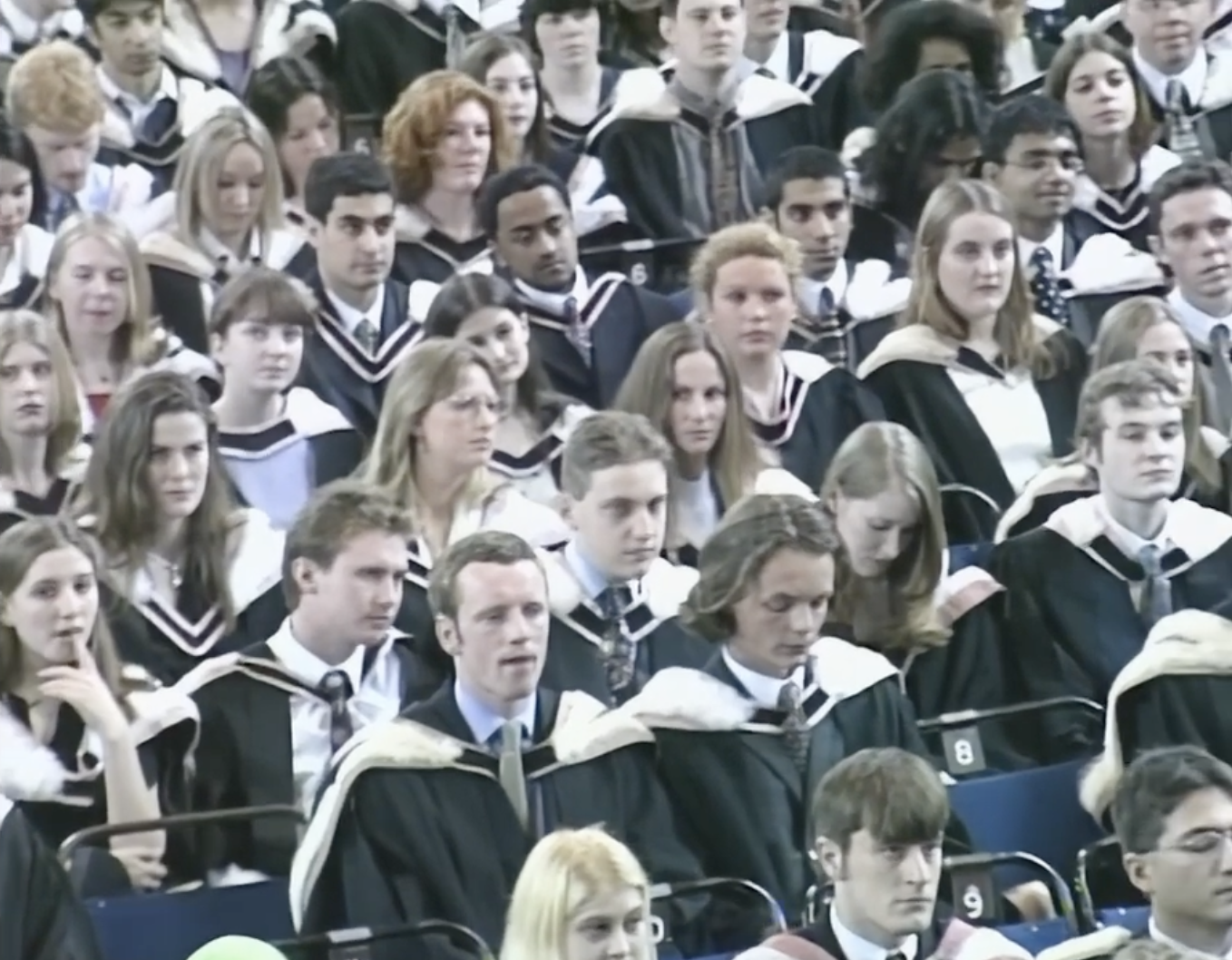
The TODAY is the title of this article is not 4th July 2026, or even the 4th July 1776, but the 4th July 1996, I got here using a time-travel machine and a hole in the space-time continuum called the The University of Manchester Graduation Archive YouTube channel. There is footage here every year stretching back to 1987. The screenshot above is taken from this video: youtube.com/watch?v=tfF43_2i2XQ&t=1658s

Thanks to Julian Skyrme for pointing out the graduation archive which captures the Happy Days of the Summer of ’96, and many others. Back in the summer of ’96. Woah Yeah!
References
- Mary Williams (2009) Why Study Plants? The Plant Cell. 21 (10) Teaching Tools in Plant Biology, American Society of Plant Biologists (ASPB) doi.org/cwk56d (TL;DR “Plants provide us with oxygen, food, medicine, energy and materials. Scientists study plants to improve and secure the food supply for an increasing world population, identify new sources of medicines, improve production of materials and identify sources of biofuels and renewable resources. Studying plants increases our knowledge about life in general and helps us to work with them to keep us fed, healthy, sheltered, clothed, entertained and happy.”)
- Joan Watson (2005) One hundred and fifty years of palaeobotany at Manchester University, Geological Society of London, Special Publications, Volume 241, Pages 229 – 257 DOI:10.1144/GSL.SP.2003.207.01.16
- Duncan Hull (1995) Signal Transduction During Embryogenesis in Fucoid Algae, BS304 dissertation, School of Biological Sciences, University of Manchester.
- David Walker (1992) Energy, Plants and Man, Oxgraphics Limited, Brighton, Sussex. ISBN:1870232054
- Jacqueline A. Potter, Malcolm C. Press, Terry V. Callaghan, and John A. Lee. (1995). “Growth Responses of Polytrichum commune and Hylocomium splendens to Simulated Environmental Change in the Sub-Arctic.” New Phytologist 131 (4): 533–41. (I get name-checked in the acknowledgements, the first time I’m mentioned in any scientific literature, woohoo!) DOI:10.1111/j.1469-8137.1995.tb03089.x
- Sarah-Jayne Blakemore (2019) Inventing ourselves: The secret life of the teenage Brain, Black Swan, London, ISBN:9781784161347 (Sarah argues that adolescence extends beyond our teenage years and into our twenties)
- Robin Baker (1996) Sperm Wars: Infidelity, sexual conflict and other bedroom battles, Fourth Estate, London, ISBN:9781857023565 (Some plants have motile sperm too, not the confusingly named Spermatophytes but Bryophytes, Pteridophytes, Ginkgos and Cycads.)
- Chuck Palahniuk (1999) Invisible Monsters, Vintage, London: ISBN:9780099285441 (From the author of Fight Club)
- Grainne Kearney, Nick Gardiner, Davina Carr, Martina Kelly, Gerard J Gormley, (2025) See one, do one, teach one: other professionals don’t accept this so why should the medical profession? BMJ 2025; 389 DOI:10.1136/bmj.r432
- Duncan Hull (2026) Coding Your Future: A guidebook for students, cdyf.me, University of Manchester
- Bryan Adams (1984) Summer of ’69 in Reckless. A&M Records. “I got my first real six-string, bought it at the five and dime. Played it ’til my fingers bled, was the summer of ’69… Those were the best days of my life”
This articles is also available at linkedin.com/pulse/thank-you-everybody-who-helped-me-graduate-today-duncan-hull–dxq2e


