O'Really?

February 25, 2009

A Fistful Of Papers: Journal Club for Gunslingers

Filed under: biotech — Duncan Hull @ 4:30 pm
Tags: , , ,

Clint Eastwood by DunechaserA Fistful of Papers is a Journal Club with a simple recipe

  1. We pick interesting papers
  2. We read them
  3. We periodically meet to discuss said papers in the pub local saloon

It’s all good fun, if you’d like to join us, details of the next gathering on Friday 27th February, can be found over at fistful.wordpress.com (Journal Club for Gunslingers).

[Clint Eastwood picture by Lego Man Andrew Becraft a.k.a. Dunechaser]

February 20, 2009

Mistaken Identity: Google thinks I’m Maurice Wilkins

Who's afraid of Google?In a curious case of mistaken identity, Google seems to think I’m Maurice Wilkins. Here is how. If you Google the words DNA and mania (google.com/search?q=dna+mania) one of the first results is a tongue-in-cheek article I wrote two years ago about our obsession with Deoxyribonucleic Acid. Now Google (or more precisely Googlebot) seems to think this article is written by one M Wilkins. That’s M Wilkins as in the physicist Maurice Wilkins, the third man of the double helix (after Watson and Crick) and Nobel prize winner back in ’62. How could such a silly (but amusing) mistake be made? Because the article is about what Wilkins once said, but not actually by Wilkins. Computers can’t tell the difference between these two things. Consequently, it has been known for some time that Google Scholar has many other mistaken identities for authors like this. Scholar even thinks there is an author called Professor Forgotten Password (a prolific author who has been widely cited in many fields)!

The other curiosity is this, the original post on nodalpoint.org is also counted as a citation in Google Scholar too. It’s a bit of a mystery how scholar actually works, what it includes (and excludes) and how big it is, but you’ll find the article counted as a proper citation for a book about genes. Scientific spammers must be licking their lips with the opportunity to influence results and citation counts, with humble blog posts, rather than more kosher articles in peer-reviewed scientific journals.

So what does this all this curious interweb mischief tell us?

  1. Identifying people on the web is a tricky business, more complex than most people think
  2. Googlebot needs to have its algowithms tweaked by those Google Scholars at the Googleplex. Not really surprising, what else did you expect from Beta software? (P.S. Googlebot, when you read this, I’m not Maurice Wilkins, that’s not my name. I haven’t won a Nobel prize either.  I’m sort of flattered that you’ve mistaken me for such a distinguished scientist, so I’ll enjoy my alternative identity while it lasts.)
  3. Blogs are increasingly part of the scientific conversation, counted in various bibliometrics, will Google Scholar (and the rest) start indexing other blogs too? Where will this trend leave more conventional bibliometrics like the impact factor?

(Note: These search results were correct at the time of writing, but may change over time, results preserved for posterity on flickr)

References

  1. Maurice Wilkins (2003) The Third Man of the Double Helix: The Autobiography of Maurice Wilkins isbn:0198606656
  2. Péter Jacsó (2008) Savvy searching – Google Scholar revisited. Online Information Review 32: 102-11 DOI:10.1108/14684520810866010 (see also Defrosting the Digital Library)
  3. Douglas Kell (2008) What’s in a name? Guest, ghost and indeed quite imaginary authorships BBSRC blogs
  4. Neil R. Smalheiser and Vetle I. Torvik Author Name Disambiguation (This is a preprint version of a chapter published in Volume 43 (2009) of the Annual Review of Information Science and Technology (ARIST) (B. Cronin, Ed.) which is available from the publisher Information Today, Inc (http://books.infotoday.com/asist/#arist).
  5. Duncan Hull (2007) DNA mania. Nodalpoint.org
  6. Jules De Martino and Katie White (2008) That’s not my name (video)

February 11, 2009

Janet Street-Porter on the Internet Revolution

Janet Street-PortableI’m not much of a fan of Janet Street-Porter, neither am I a regular viewer of the BBC Money programme but right now they are screening an interesting series of three half-hour programmes on the impact of the internet on newspapers, books and television. It’s a familiar tale of the power-and-money struggle between old media and new media that, if the first programme is anything to go by, is worth watching. Here is the blurb from the first episode in the series, billed as Media Revolution: Stop Press?

Former national newspaper editor Janet Street-Porter investigates how papers are coping with falling circulation, advertising revenues and the growth of the internet, and asks if newspapers can survive in their current form. In her quest to discover what the future holds for her beloved newspapers, Janet visits newsrooms, printing plants and even spends a morning as a papergirl. With contributions from national editors, advertising gurus and a rare interview with media mogul Rupert Murdoch, Janet examines if papers can survive as new multimedia information giants.

There are some interesting parallels between the changes described in this programme, and scientific media, especially the scientific journal publishing racket.

Scientific Media Revolution?

The story of the current revolution in scientific and technical publishing is perhaps just as interesting (and more important) than the one being told on the money programme. Just think of it, why scientists publish, the emergence of peer review, how Robert Maxwell made his fortune from the Pergamon Press, the impact factor game, the birth of the Web (in a scientific laboratory), the growth of Google, the copyright wars, open-access publishing, social software, the rise and fall of publishing empires (and technology companies), the vanity journals, scientific blogs and wikis, software showdowns, how all this change affects producers and consumers of science and technology, both now and in the future. A juicy subject, worthy of broadcasting on any media (old or new). You would need a lot more than three half-hour programmes to cover this particular ongoing epic, so who is going to tell that story?

Anyway, the series is worth a look (if you haven’t already seen it) at least according to me  (others disagree see also no paper is the future). It is also available on iPlayer for up to a week after first broadcast – Thursday 5th, 12th and 19th February 2008 – for each episode in the UK only, unless you go through some kind of proxy.

February 6, 2009

The Loneliness of the Long Distance Researcher

Nice Idea by Libby MillerDespite what some people think (see “the myth of the lone inventor” in [1]) most scientists are usually pretty sociable people. Science is an inherently social activity [2], just take a look around you. Most laboratories are full of like-minded people working on related problems, our lab is no exception. Outside the lab, there are all the conferences, workshops, seminars, trips to the pub, coffee breaks and other meetings where scientists meet and exchange ideas and results. Finally, note the peer in peer-review – another essentially social activity, even when it is anonymous.

But in between these gregarious social activities there is a long, lonely and pretty unsociable road where you need to spend lots of time thinking, reading, writing and experimenting. Essentially you are alone, like a modern day hermit, especially at the earlier stages of a career. Solitary confinement in your ivory tower of choice needs to be balanced with various kinds of socialising. Talking about and watching what other people are doing, as well as publicising your own work are an essential part of the mix. But you still need to put the hours in on the road. It isn’t always easy to get it right, so how do you strike a balance between the social and the solitary activities to establish yourself as an independent research scientist? (more…)

January 20, 2009

Donald Braben on Scientific Freedom

The Elixir of Civilization?Donald Braben was in Manchester last week, to give a seminar on scientific freedom, here is the abstract of his talk:

Every major scientific discovery came unexpectedly out of the blue.  Until a few decades ago, creative researchers were free to explore. The unpredicted harvest was prodigious. Nowadays, academic research is subject to unprecedented levels of control.  Consensus rules.  In industry, companies focus on “core business“, and severely restrict the range of their research.  Consequently, caution is encouraged everywhere, and highly original research is curtailed.  As a result, there has been a dearth of major new scientific discoveries in recent years.  The significance of the problems and their possible solutions will be discussed.

So who is Donald Braben? Don has held a senior position at the Cabinet Office in Whitehall, and a has a visiting Professorship at University College London (UCL) . He has written two books [3,5], going against the currently prevalent views on science funding. To overcome the problem of the lack of scientific freedom, Braben proposes the creation of a twenty first century “Planck Club”, (named after some bloke called Max Planck). The Planck Club consists of an elite group of the very best scientists who are completely free to explore their ideas without submitting their project proposals to peer review (what Don calls “peer preview”).

Most of the audience were sympathetic to what Don had to say, and his talk provoked an extended discussion about the best way to fund the best Science. All this reminds me of the Skunk Works projects and the infamous “20% time” given to engineers at Google – freedom in Science (and engineering) really matters, but it isn’t always so easy to decide who deserves it and why. Thanks to Don for an entertaining and thought-provoking seminar, and thanks to Paul Popelier for organising it.

If this kind of stuff interests you, take a look at the references below.

References

  1. Peter Augsdorfer (2008). Book review: Scientific freedom ChemBioChem 9 (17), 2889-2890. DOI:10.1002/cbic.200800670 “The real value of the book is that it shows that unconstrained funding can really work and it tells us how.”
  2. Tim Birkhead (2008). In praise of fishing trips: The tyranny of ‘the hypothesis’ has made science too timid Times Higher Education 2008-07-31
  3. Donald Braben (1994) To Be A Scientist: The spirit of adventure in science and technology, Oxford University Press, isbn:0198522908
  4. Donald Braben (2007). UK Science must not roll over and play dead Times Higher Education 2007-12-07
  5. Donald Braben (2008). Scientific Freedom: The Elixir of Civilisation, Wiley, isbn:0470226544
  6. Donald Braben (2008). Why peer review thwarts innovation New Scientist 2644, 2008-02-23,
  7. Donald Braben (2008). Shoot for the blue skies: The Research Assessment Exercise (RAE) constrains academics Times Higher Education 2008-12-22
  8. Zoe Corbyn (2008). Kill peer-review, save civilisation. Times Higher Education 2008-04-17
  9. Tom Feilden (2008). Searching for Einsteins: Is Science stagnating? BBC blogs (and Radio 4 Today programme) 2008-12-11
  10. Krebs and Braben (2009). Don Braben and John Krebs discuss is funding for scientists is under threat Today programme 2009-02-27
  11. Mark Gilbert (2009). Being judged is hard, not being judged is worse Times Higher Education 2009-01-15
  12. Douglas Kell (2009). Scientific Freedom at the UK Research Councils BBSRC blogs 2009-01-05
  13. KFC (2009). How Google’s PageRank predicts Nobel Prize winners arxivblog.com, the physics arXiv blog 2009-01-21
  14. Michael Nielsen (2008). Three myths about peer review michaelnielsen.org 2009-01-08

January 8, 2009

Data Integration in the Life Sciences (DILS 2009), Manchester

Cristiano Ronaldo by vuhlserData Integration in the Life Sciences (DILS 2009) is the sixth in an international workshop series that aims at fostering discussion, exchange, and innovation in research and development in the areas of data integration and data management for the life sciences. DILS 2004 in Leipzig, DILS 2005 in San Diego, DILS 2006 in Cambridge, DILS 2007 in Philadelphia, and DILS 2008 near Paris each attracted around 100 researchers from all over the world [1]. This year, DILS 2009 is being held in the People’s Republic of Manchester, UK.

Although the workshop isn’t until the 20th July,  the deadline for paper abstracts is the 13th February, so if you’re planning on coming, better hurry up (see picture, top right) with those submissions. As with last year, the workshop proceedings will be published by Lecture Notes in Computer Science (LNCS) from Springer.

References

  1. Fifth International Workshop, DILS 2008, Evry, France, June 25-27, 2008. Proceedings 10.1007/978-3-540-69828-9

[Gratuitous creative commons licensed picture of Manchester United Football Club player Cristiano Ronaldo by vuhlser. Must be time to buy a new Ferrari.]

December 17, 2008

Happy Christmas Lectures 2008

Machines that learn by Kaustav BhattacharyaOne of the most important Christmas traditions in Europe, aside from drinking too much, excessive eating and generally conspicuous over-consumption, are the Royal Institution Christmas lectures. This year, they are being given by Professor Christopher Bishop (pictured right), Chief Scientist at Microsoft Research and are on the subject of the Quest for the Ultimate Computer. This hi-tech trek includes subjects such as machine learning, microchip design, artificial intelligence and Web technology. Here is the blurb from the one of the lectures to give you a flavour:

“Computers are extraordinary machines, able to perform feats of arithmetic that far exceed the capabilities of any human. They can store a huge quantity of data, and recall it perfectly in the blink of an eye. They can even beat the world champion at chess. So why do computers struggle to solve apparently simple tasks such as understanding speech, or translating text between languages? Why is a 3 year old toddler better at recognising everyday objects than the world’s most powerful supercomputer? In the last of this year’s Christmas Lectures, Chris Bishop will look at one of the great frontiers of computer science. We’ll see how some of the toughest computational problems are now being tackled by giving computers the ability to learn solutions for themselves, in much the same way as people learn by example. This has led to impressive progress with problems such as recognising handwriting and finding information on the web. But we are only beginning to explore the power of computation, and there are many challenges ahead in our quest for the ultimate computer.”

Broadcast on Channel 5 (starting Monday 29th December, consult your UK TV guide for details), these lectures are aimed at children, but can be enjoyed by kids of all ages (including grown ups). The lectures will also be available as a webcast from rigb.org and probably youtube as well. Whatever you’re doing over the coming holidays have a very happy Christmas, pagan solstice festival, winterval. Wherever you are, don’t forget to enjoy an intellectually nourishing side-portion of Computer Science with your festive feasting!

References

  1. http://www.rigb.org/christmaslectures08/
  2. Watch this: Royal Institution Christmas Lectures 2008, The Guardian 2008-12-29
  3. Review of Last Night’s TV: Christmas Lectures, The Independent 2008-12-30
  4. John Benyon Christmas Lectures: Untangling the Web
  5. Rich from Bechtle Christmas Lectures 2008, much better!

[Picture of Chris Bishop by Kaustav Bhattacharya]

December 10, 2008

Congratulations Carole Goble, e-Scientist

Carole Goble wins first Jim Gray e-Science awardAt the Microsoft e-Science workshop in Indianapolis, earlier this week Carole Goble was awarded with the first Jim Gray 2008 e-Science award, pictured here collecting the prize from Tony Hey of Microsoft Research. You can read all about it in the Seattle Tech Report which says:

“As director of the U.K.’s myGrid project, Goble helped create Taverna, open source software that allows scientists to analyse complex data sets with a standard computer.”

It is very inspiring when colleagues win prizes and awards. Personally, I would not be here doing what I’m doing if it wasn’t for Carole and myGrid, and neither would many other people who work on (or have worked on) myGrid and related projects.

Carole, you are an inspiration to us all, congratulations! To celebrate your success, I’m off to commit some more of the seven deadly sins of bioinformatics [1]…

References

  1. Carole Goble The Seven Deadly Sins of Bioinformatics
  2. e-Science in Indianapolis: Carole Goble wins the 1st Jim Gray eScience Award
  3. Joseph Tartakoff British professor given first Jim Gray Award, Seattle Post-Intelligencer, Tech Report
  4. Todd Bishop UK prof receives Jim Gray award Tech Flash
  5. Savas Parastatidis Carole Goble as the first recipient of the “Jim Gray eScience Award”
  6. Microsoft Recognise Manchester e-Science Contribution
  7. Deborah Gage Microsoft creates award in the name of Jim Gray San Francisco Chronicle, The Tech Chronicles
  8. Microsoft New tools for Discovery on Display at e-Science workshop

December 2, 2008

SWAT4LS: The Semantic Web in Scotland

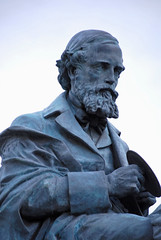
James Clerk MaxwellLast Friday, the UK National e-Science Centre in Edinburgh hosted a workhop, Semantic Web Applications and Tools for the Life Sciences (see SWAT4LS.org for the full details). Here are some incomplete and abbreviated notes from the workshop where there were some interesting people, paperware and software.

People and Paperware

70 people registered to attend SWAT4LS in total, many familiar names and faces, plus some new people I’ve never met before: (more…)

November 27, 2008

Blogging Professors: Douglas Kell at the BBSRC

Filed under: web of science — Duncan Hull @ 12:53 pm
Tags: ,

Biotechnology and Biological Sciences Research CouncilTo add to the growing list of big boffins with blogs, Professor Douglas Kell has launched his BBSRC hosted blog. So has blogging finally gone from an innovative underground movement to grown-up mainstream everyday technology, as recently suggested in The Economist? How many more senior scientists might we see blogging in the future? Take a look at blogs.bbsrc.ac.uk to find out..

I asked Doug if he would consider blogging, for the Science blogging challenge posed by Nature Publishing Group, so thanks Doug for being open minded and willing to experiment, you’ve also been entered for the Open Laboratory 2008 competition too. It will be interesting to see what the result of this project will be…

References

  1. Zoe Corbyn (2008). New BBSRC chief executive enters blogosphere, Times Higher Education, 11th December 2008.
« Previous PageNext Page »

Blog at WordPress.com.